|
•••
|
|
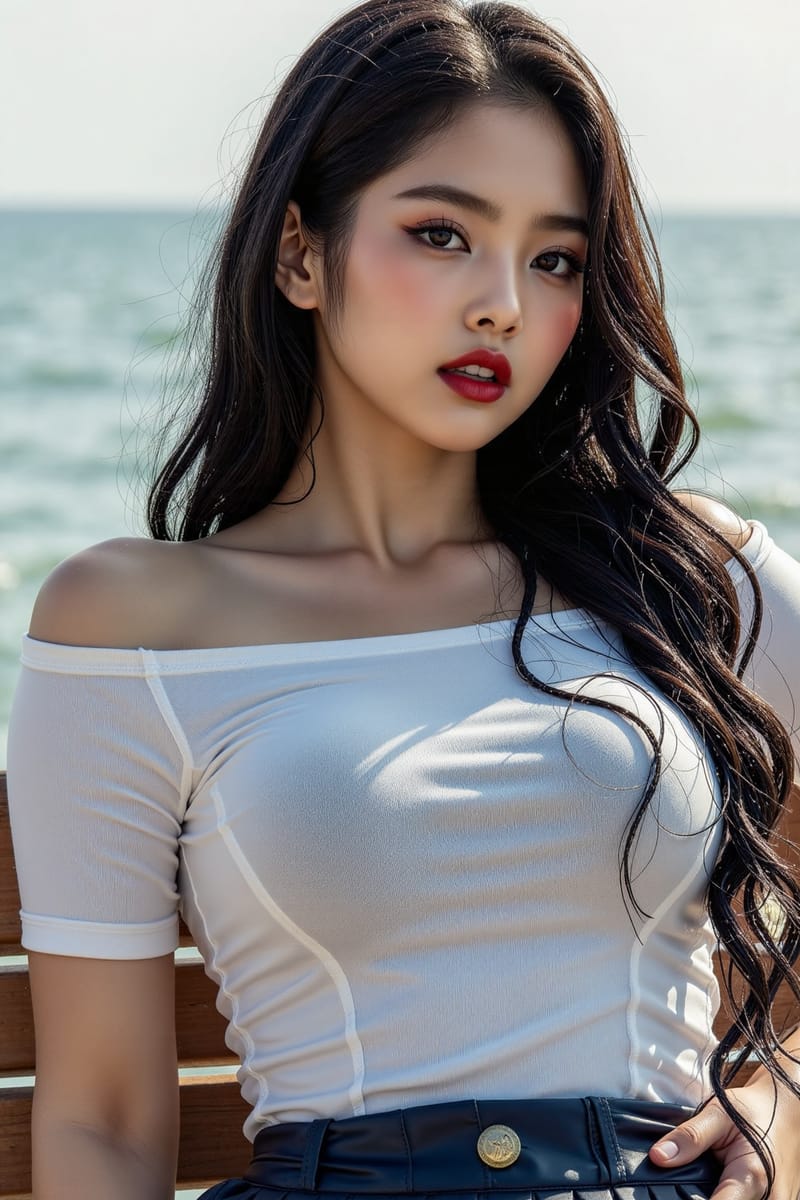
For about a year, I was a photographic prompter. The kind of prompts I wrote read like the back of a camera manual. Eighty-five millimeter lens. Soft window light from the upper left. Kodak Portra 400 grain. The atmosphere of a Bill Henson photograph. My output was strong. Editorial portraits, moody landscapes, food photography that looked like it belonged in a cookbook. I had found a vocabulary that worked, and I worked it into the ground.
Then I tried to make anime. The same vocabulary that produced beautiful portraits returned something that looked like a confused photograph trying to remember a cartoon. The faces were almost right. The proportions were almost right. The lighting felt vaguely correct. But anyone who has ever read a manga knew immediately that whatever I had made was not anime. It was a portrait of a person dressed as anime, photographed by an AI that did not understand the costume.
I spent two more months thinking the problem was that my prompts were not detailed enough. I added more words. I described the eye style. I named the genre. The output got marginally better and stayed firmly outside the realm of actual anime. Then someone showed me what they were doing differently, and I realized I had been speaking the other language the entire time.
|
|
One
Two completely different languages.
|
|
Realistic AI prompting is descriptive. You write sentences. You name a camera, a lens, a lighting setup, a mood. The grammar is borrowed from photography itself. A working realistic prompt reads like a director briefing a cinematographer.
A woman in her 30s reading by a sunlit window, holding a porcelain cup. Shot on 50mm f/1.8 lens. Warm natural light, slight film grain. The atmosphere of a quiet Sunday afternoon.
Anime AI prompting is taxonomic. You do not write sentences. You write tags separated by commas, drawn from a specific database called Danbooru that has indexed anime art for two decades. You stop describing and start labeling. The grammar is borrowed from how fans tag their favorite art online, not from photography.
very awa, masterpiece, best quality, absurdres, 1girl, long black hair, blue eyes, school uniform, looking at viewer, soft cel shading, shoujo manga style
The same scene, both vocabularies. The realistic version describes the moment. The anime version names its components. Each tool was trained to expect one or the other, and mismatching the vocabulary to the tool is exactly why my anime portraits failed for a year.
|
|
Two
Two completely different toolsets.
|
|
For realistic work, the field has converged on a small handful of strong choices. ChatGPT Images 2.0 wins on commercial polish and text rendering. Z Image and Qwen produce the most photographic output for social posts. Midjourney remains the choice for cinematic stylized work. These tools were trained primarily on photographs and stock illustrations, which is why they excel at recreating that aesthetic and struggle with anime.
For anime, the field is dominated by three open-source models that almost nobody outside the anime AI community talks about. Illustrious XL is the current leader, with the cleanest line work and the most consistent anatomy. NoobAI XL is its slightly more flexible cousin, fine-tuned for stylistic range. Pony Diffusion V6 is the veteran with the largest asset library. All three were trained on Danbooru, which is why they understand the visual grammar of anime in a way the general tools never quite manage.
You cannot fix one toolset with better prompts in the other. Better realistic prompts in an anime tool produce confused realism with anime aspirations. Better anime prompts in a realistic tool produce a photograph that vaguely remembers anime. The fix is to switch tools when you switch styles, and to stop trying to find a single tool that does both well. There isn't one.
|
|
Three
The same skill underneath.
|
|
The vocabularies are different but the underlying skill is the same one. You are still composing a frame. You are still making decisions about subject, mood, lighting, and composition. You are still writing the brief that the model will execute. Only the syntax of the brief changes.
Realistic prompts use named cameras as a shortcut for an entire visual register. Anime prompts use Danbooru tags as a shortcut for an entire genre tradition. Both are leveraging shared cultural knowledge that the model has absorbed in training. The trick to becoming fluent in either is to spend time in the source material until the vocabulary feels obvious. For realistic work that means looking at photography. For anime that means looking at manga and reading the tags people use to describe what they are seeing.
Once you have spent time on both sides, the switch between them becomes a small mental adjustment rather than a wall. You stop thinking of them as two different skills and start thinking of them as two dialects of the same craft. The realistic prompter and the anime prompter are doing the same thing in different keys.
|
|
Four
When to use which.
|
|
Use realistic tools when the work needs to look like it was photographed or shot for an editorial. Product photography. Lifestyle content. Headshots. Anything that needs to live next to actual photos without revealing itself. The realistic tools are also the right choice for hyperreal stylization, like cinematic frames that borrow from film but stay in the photographic register.
Use anime tools when the work is meant to be illustration, regardless of how realistic the illustration is. Character art. Manga panels. Visual novels. Album covers in the anime tradition. Concept art for games. Even semi-realistic stylized work like Studio Ghibli homages or modern shounen aesthetics belongs in the anime tools, because they understand the line work and shading conventions that make those styles legible.
There are edge cases that benefit from running both. A character portrait that needs to feel painted but also human. A book cover where you want anime composition with photographic lighting. The trick for those is to generate in the anime tool first, then bring the output into a realistic tool for selective refinement. The reverse rarely works. Once a realistic tool has rendered a face, getting it to look like cel-shaded illustration is fighting the model the entire way.
|
|
Five
How to start switching.
|
|
If you have been a realistic prompter, the easiest way into anime is to go to a hosted service that runs the anime models in your browser. Tensor.Art and Yodayo are the gentlest entry points. No installation, no GPU required, starter credits at no cost. Pick Illustrious XL as your first model. Paste the example prompt above. Generate. Then change one tag at a time and watch what each tag does.
If you have been an anime prompter and want to try realistic work, the entry is even simpler. Open ChatGPT or Replicate and start writing in sentences instead of tags. Name a camera. Name a lens. Describe the light. The vocabulary you have absorbed from photography over a lifetime, even unconsciously, will start showing up in the prompts. The first realistic image you generate after months of anime feels strange in the same way the first anime image felt strange after months of photography. That strangeness fades within a few hours.
The full breakdown for anime, with twelve ready-to-paste prompts across all three tools, the negative prompts that prevent common failures, and a side-by-side of the four hosted services that run them, is what I am building into the next field guide. If you have been wanting to expand from one style into both, the request line at the bottom of this issue is the path.
|
|
•••
I am putting together the full anime field guide as a downloadable pack. Twelve ready-to-paste prompts across all three tools, the negative prompts, and the platforms that run them in your browser.
Want the early version? Reply with send me the anime pack and I will get it to you when it is ready.
|
|
A QUESTION FOR YOU
Which side have you been working on, and which one calls you next?
Reply and tell me. The replies determine which deep dives I cover next, and whether the next field guide should focus on realistic, anime, or the bridge between them.
If this issue resonated, forward it to a friend who is curious about the other side.
|
|
Until next time,
Luxe Prompting
|
|
Luxe Prompting
AI Image Generation for Creators
|
|