
In partnership with

 LUXE PROMPTING
LUXE SEASONAL
3 Halloween Photo Prompts for October's Biggest AI Trends
ChatGPT Images 2.5 and Google's new Nano Banana 2.1 can both take a selfie as a reference, and this October people are using them for nostalgic horror: a flash-lit late-'90s bedroom with a masked figure in the doorway, a bedsheet ghost on a fall road trip, a Victorian "spirit photograph."
Here are three complete prompts for those trends. They're written to keep your face recognizable, skip the gore and stay clear of copyrighted characters, and each comes with an example we generated for this issue.
Got questions about hiring globally?

The best person for your next role might not live near your office — or even in the same country.
And more companies are realizing they don't need to open entities everywhere just to hire great talent globally.
Instead, teams are using an employer of record (EOR) to hire internationally faster, stay compliant, and avoid the operational headache of setting up local infrastructure before they're ready.
That shift is changing how companies think about growth, hiring, and expansion altogether.
Oyster's EOR helps companies hire, pay, and support employees in 180+ countries while Oyster handles payroll, compliance, taxes, and local employment requirements.
The Short Version
- Three copy-paste prompts for this month's most-shared Halloween photo formats: the '90s horror still, the sheet-ghost shoot and the Victorian spirit photo.
- Each one leads with the scene, then says what must stay the same from your photo.
- Suspense, not violence: no blood, no weapons, no named film characters.
How to use these prompts
Upload one clear, front-facing photo with even light. Paste the full prompt into ChatGPT or the Gemini app and replace anything in square brackets. Use a photo of yourself, or one you have clear permission to use.
One trend guide this month notes that suspense gets blocked far less often than gore. Describing a masked figure instead of naming a film character, and keeping it creepy rather than violent, avoids most refusals.
Our examples were made with beehiiv's built-in, Gemini-based image tool, with fictional people described in place of a reference photo. They show what each prompt asks for, not how closely any tool copies a real face.
1. The late-'90s horror still
This is the month's most-shared format. The prompt describes the masked figure instead of naming any film character, which keeps it original and makes refusals less likely.
The exact prompt
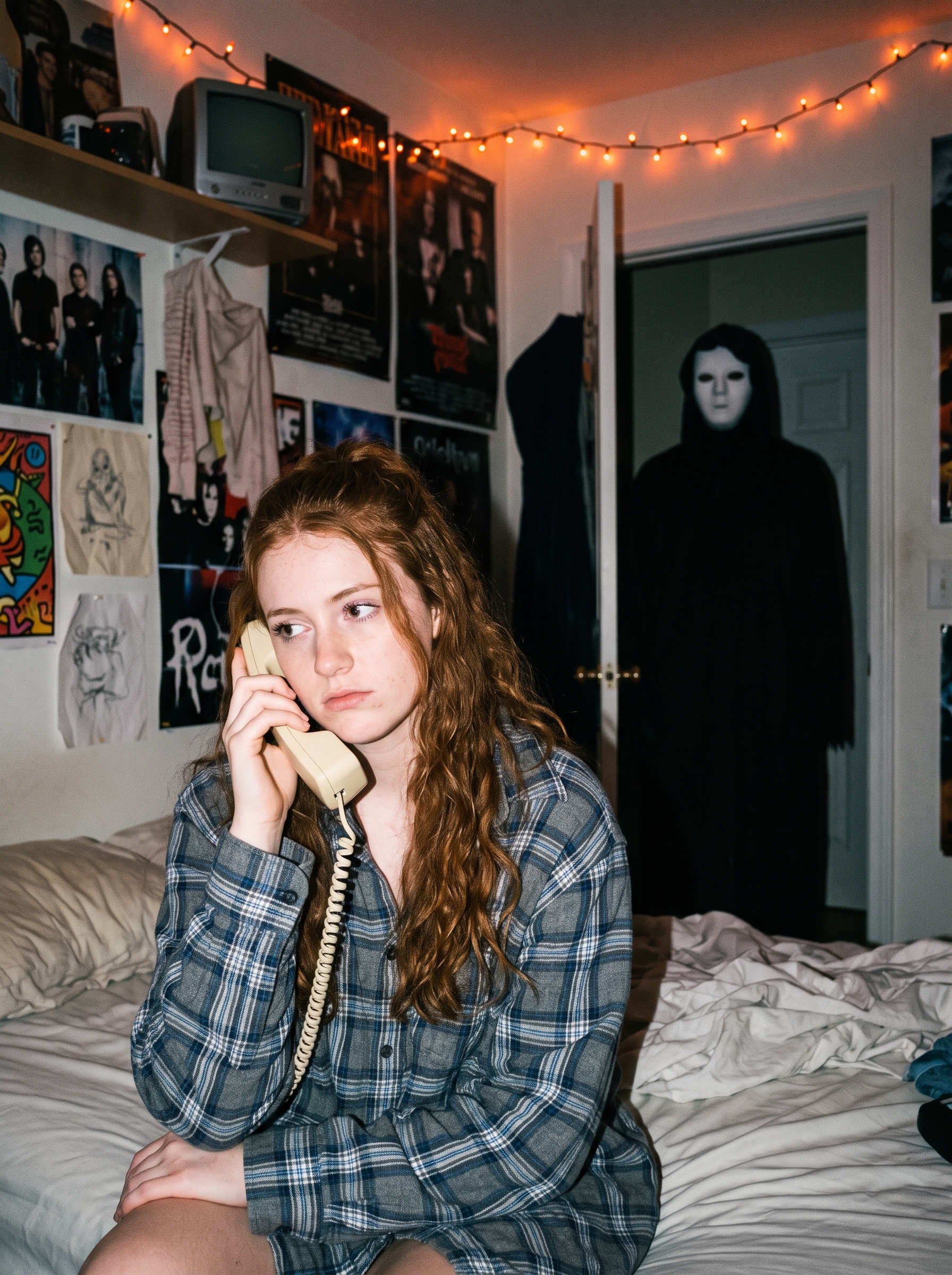
Original Luxe AI-generated example made for this issue with beehiiv's Gemini-based image tool, from a close version of the prompt below, with a fictional person described in place of a reference photo.
Turn the uploaded photo into a candid still from a late-1990s horror movie. Keep the person's face, features and hairstyle exactly as in the photo. They sit on a bed in a cluttered teenage bedroom at night, holding a corded beige landline phone to their ear, looking bored, wearing [an oversized grey flannel shirt]. Posters on the wall, a small tube TV, orange string lights. In the dark doorway behind them, slightly out of focus, a tall figure in a long black hooded robe and a plain white mask stands still, half in shadow. Harsh on-camera flash, visible film grain, slightly faded warm colors, vertical 4:5. Unsettling, not gory. No blood, no weapons, no readable text, no logos, no watermark.
Why it works: A specific era plus a specific camera (cheap flash, grain, faded color) gives the model a whole look to copy, while one sentence carries your identity.
Try it: ChatGPT · Gemini app
What the result shows
The flash, grain, string lights and landline all landed, and the masked figure stands in the doorway as described. Two misses: the figure came out sharp rather than slightly out of focus, and a few posters carry garbled lettering despite "no readable text." For a creepier frame, try "blurred and barely visible in the dark."
One variation to try
Move it to a kitchen at night with the fridge light as the only glow, or swap the landline for a flip phone for a mid-2000s feel.
2. The sheet-ghost road trip
This is the cozy side of the trend. Your face is hidden, so the work is in keeping your build, clothes and shoes from the photo.
The exact prompt
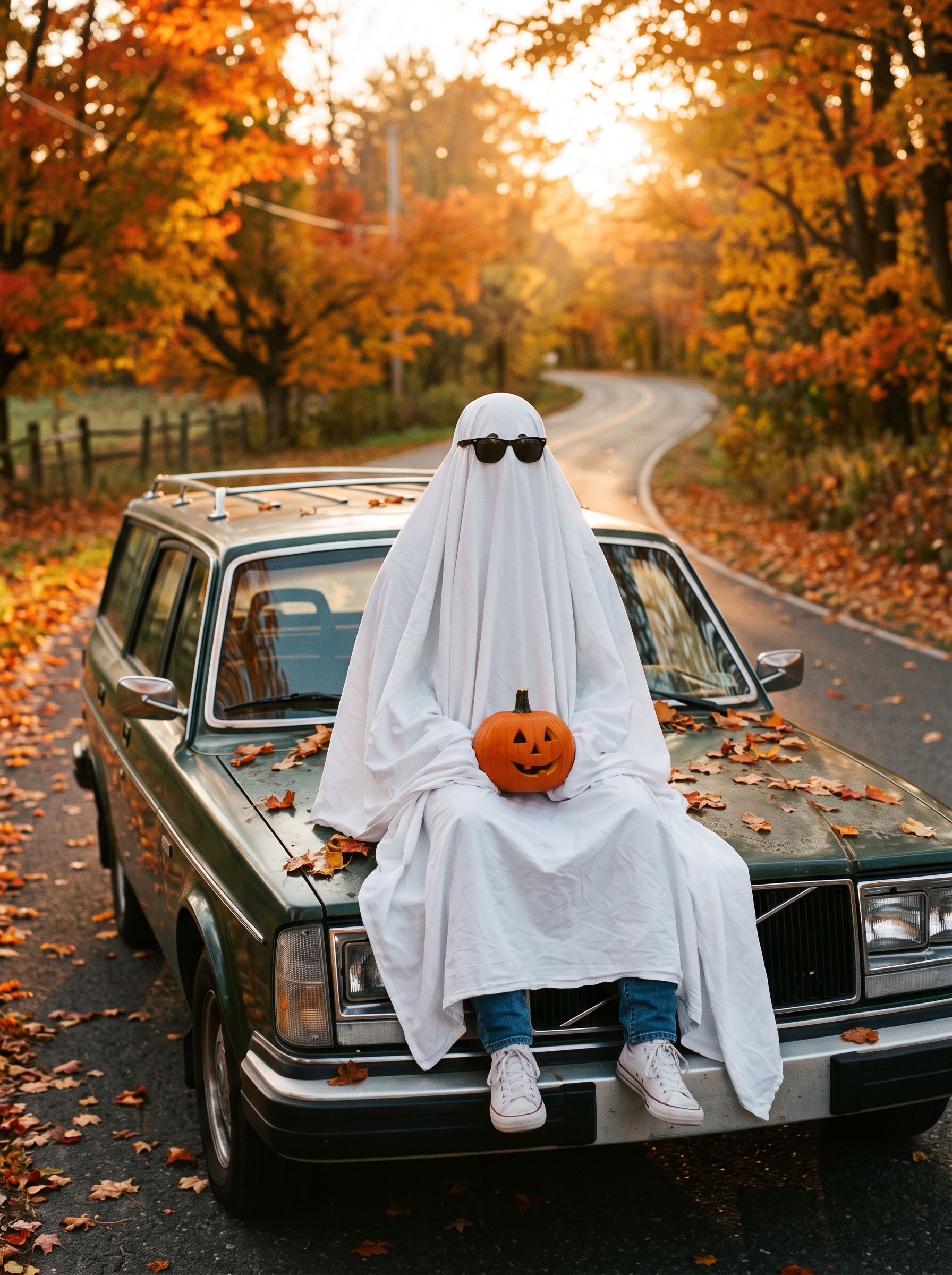
Original Luxe AI-generated example made for this issue with beehiiv's Gemini-based image tool, from a close version of the prompt below.
Using the uploaded photo as the reference for body shape, height and clothing below the waist, show the person dressed as a classic bedsheet ghost: a white cotton sheet with two cut-out eye holes covers the head and upper body and falls in soft folds, with black retro sunglasses worn over the eye holes. They sit on the hood of a [vintage dark green station wagon] parked on a country road lined with orange and red maple trees, holding a small carved pumpkin in their lap, with [blue jeans and white sneakers] visible below the sheet. Golden-hour backlight, fallen leaves on the road, shallow depth of field, 35mm film look, vertical 4:5. Playful, not scary. No text, no logos, no watermark.
Why it works: When the face is covered, naming what to carry over from the photo (build, jeans, shoes) is what makes the result feel like you.
Try it: ChatGPT · Gemini app
What the result shows
The sunglasses, the maple-lined road, the backlight and the jeans-and-sneakers detail all match the brief. Because the sunglasses sit right over the eye holes, the holes themselves disappear. If you want them visible, ask for the sunglasses pushed up onto the top of the sheet.
One variation to try
Make it a pair: two sheet ghosts sharing a thermos on the tailgate, using two uploaded photos, one for each person.
3. The Victorian spirit photograph
The "paranormal photograph" look, a formal Victorian portrait with a translucent figure, is one of this year's most distinctive Halloween trends. This prompt asks for all three parts: a formal sitter, a translucent figure and an aged print.
The exact prompt
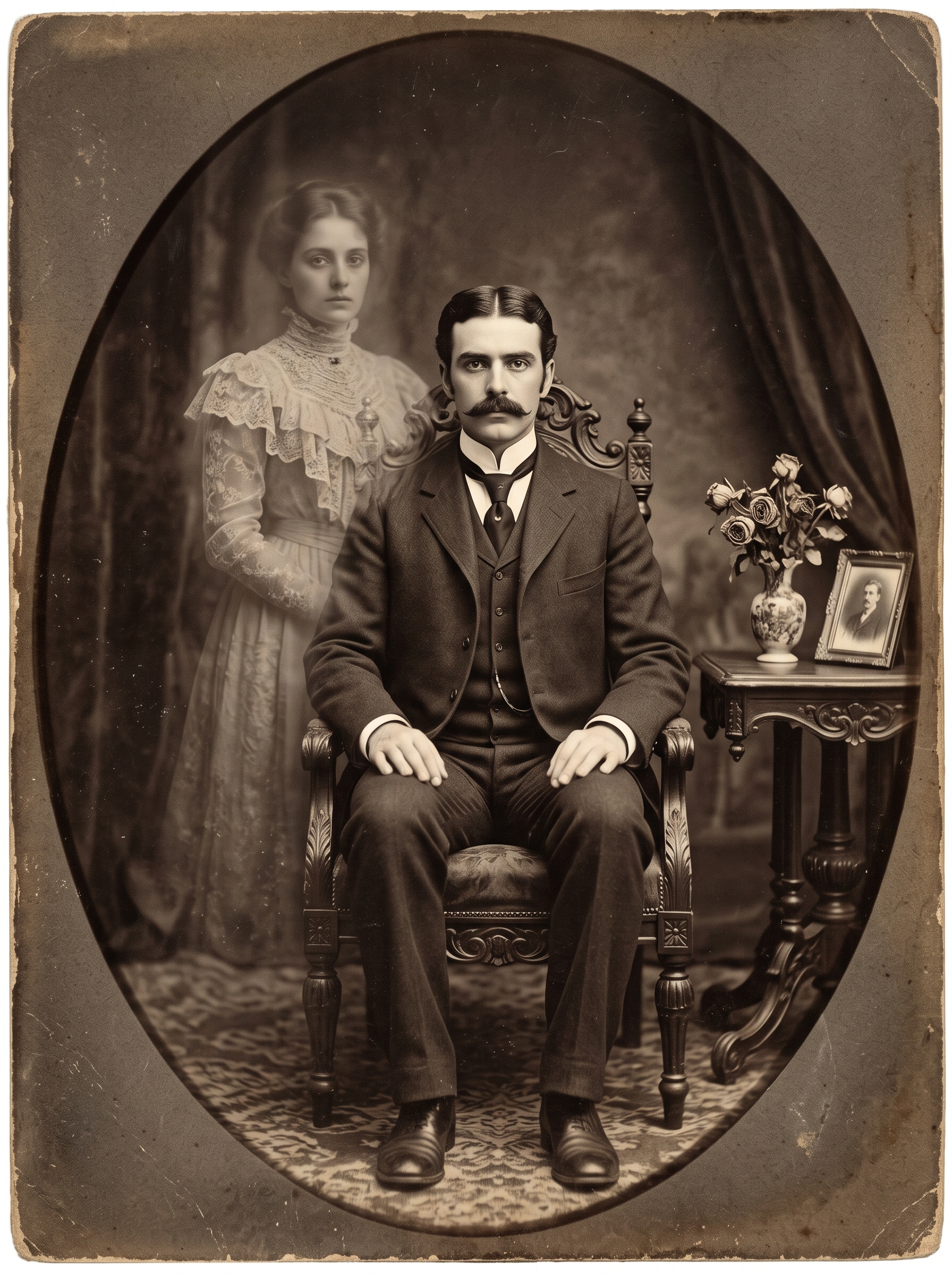
Original Luxe AI-generated example made for this issue with beehiiv's Gemini-based image tool, from a close version of the prompt below, with a fictional person described in place of a reference photo.
Turn the person in the uploaded photo into the sitter of a formal 1890s studio portrait in the style of a Victorian spirit photograph. Keep their face and features exactly the same, with period hair and clothing: [a high-collared shirt, dark waistcoat and jacket]. They sit upright in an ornate carved high-backed wooden chair beside a small side table with a vase of dried roses. Standing just behind their shoulder is a pale, semi-transparent figure in a high-necked Victorian lace dress, softly blurred as if from a long exposure. Flat studio lighting, aged sepia toning, slight halation, faint scratches and foxing, oval vignette. Haunting and elegant, not gory. No text, no logos, no watermark.
Why it works: Naming a real photographic look and its flaws (sepia, halation, foxing) gets you an aged print instead of a modern photo with a filter.
Try it: ChatGPT · Gemini app
What the result shows
The oval vignette, sepia toning, carved chair and roses all landed, and the lace-dressed figure is convincingly translucent. The model added a small framed portrait to the side table by itself. It's a nice period touch, but add "nothing else on the table" if you want a cleaner frame.
One variation to try
Swap who's the ghost: make yourself the translucent figure standing behind an empty carved chair.
A quick check before you post
- Look at the eyes, nose and hairline first. If they drift, regenerate rather than patch.
- Zoom into hands, phones and pumpkins, where small errors hide.
- Keep it PG-13: no blood, no weapons, nothing that could pass for a real crime photo.
- Label realistic AI images where the platform asks you to.
Make one of these yours
Pick one prompt, make a first image, then change one detail and compare the two.
When you share it in the community, include the result, the exact prompt and the tool you used. Add one sentence about what you changed and whether it helped.
Source Desk
All three prompts are original Luxe editorial work written for this October 2026 issue, informed by this month's coverage of Halloween AI photo trends, including the '90s horror still, sheet-ghost photoshoots and Victorian ghost portraits. Example images were generated for this issue from fictional descriptions; no real person's photo was used. Result notes describe these particular images.
Ghostface-style AI photo trend (TechOnPlay) · Halloween AI photo prompts 2026 (Random Prompts) · Ghost photoshoot trend (MakeViral) · ChatGPT · Gemini app
A clearer brief. A more useful result.