
In partnership with

 LUXE PROMPTING
LUXE MODEL FIRST LOOK
Iris-3B Turbo: 3 Prompts for the 4-Step Open Image Model
Iris-3B Turbo landed on October 12: a four-step version of Speridlabs' open Iris-3B image model that makes a 1024 × 1024 picture in about 0.7 seconds on one H100, by the team's own measure. The base model uses 100 steps by default.
It's Apache-2.0, there's a free browser demo, and it's built for one thing: trying ideas fast. Here are three prompts tuned to what Turbo does well, plus the limits worth knowing before you start.
12 ways to build real wealth

Most people have exactly one income stream: their job. Marina Mogilko (AKA Silicon Valley Girl) has twelve.
The Hustle's free wealth-building guide reverse-engineers how she got there by turning side projects into a 7-figure portfolio of courses, products, and passive commissions. It's a practical blueprint you can borrow one piece at a time.
Get it for free when you subscribe to The Hustle and join 1.5M+ readers.
The Short Version
- Turbo has no steps, guidance or negative-prompt settings. Only the prompt, the size and the seed change the result.
- Three prompts to copy: a rainy-night street photo, a two-color riso poster with two words, and a product shot.
- Seeds vary less on Turbo, so change words, not seeds, when you want a different picture.
How to use these prompts
Open the free Iris-3B Turbo demo on Hugging Face Spaces and paste a prompt. To run it locally you need an NVIDIA GPU: the Turbo weights are about 6 GB in the turbo folder of the speridlabs/iris-3b repository, with sampling code on GitHub.
Turbo was trained at about one megapixel in seven shapes: 1024 × 1024, 752 × 1344, 896 × 1344, 896 × 1200 and their landscape versions. Each prompt below lists one.
Know the trade-offs. Speridlabs says long or dense text is less reliable than on the base model, different seeds give more similar images, and faint grain can show on flat, vector-style backgrounds. The prompts below steer around all three.
Also fast and open: Alibaba's Qwen-Image-2.1-Turbo (October 9) generates and edits in eight steps on a 7B model. These prompts are plain English, so they run there too.
Our example images were not made with Iris-3B Turbo. We generated them with beehiiv's built-in, Gemini-based image tool to show what each prompt describes.
1. A rainy-night street photo
One strong light source, wet reflections and a few specific details: a photographic scene with no fine print for four steps to get wrong.
The exact prompt
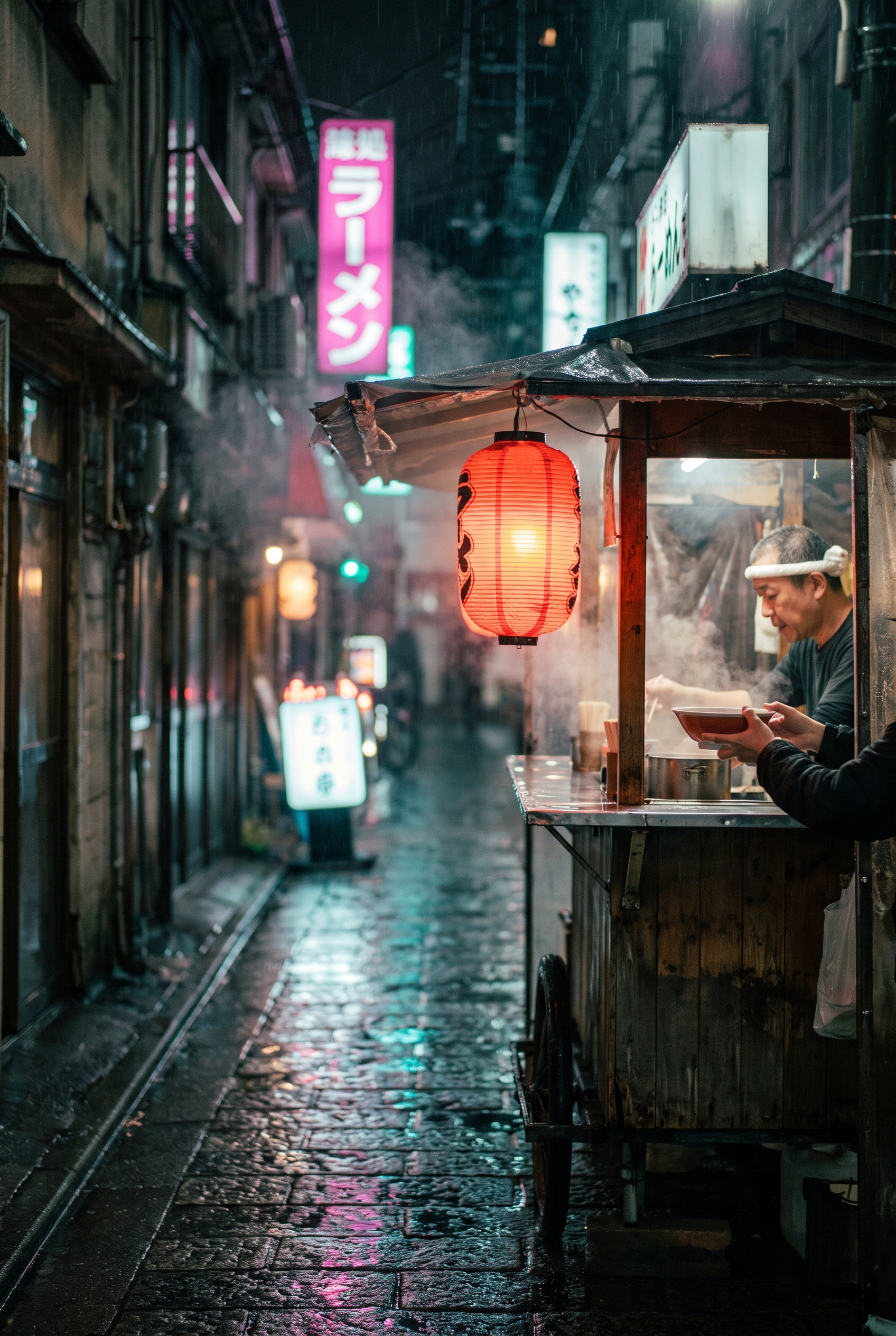
Illustrative example, not made with Iris-3B Turbo: generated for this issue with beehiiv's Gemini-based image tool from the prompt below. Your Turbo result will differ.
Size: 896 × 1344 (portrait)
A cinematic vertical street photograph of a tiny ramen stall on a narrow side street at night in the rain. A red paper lantern glows above a short wooden counter, steam rises from a bowl being served, and a cook in a white headband works behind the counter. Wet cobblestones reflect pink and teal neon from signs that are out of focus, with no readable text. 35mm lens, shallow depth of field, fine film grain, moody and warm.
Why it works: The prompt names the light (lantern, neon), the surface (wet cobblestones) and the lens, which carry most of a photo's mood, and it tells the signs to stay out of focus so there's no text to garble.
Try it: Iris-3B Turbo demo (Hugging Face) · Iris-3B weights
What to check in your result
Look at the steam and the reflections first; those are the details a fast model is most likely to flatten. Check the cook's hands, too.
One variation to try
Swap the ramen stall for a taco truck or a crêpe cart and keep the light, lens and weather words exactly as they are.
2. A two-color riso poster with two words
Short, big lettering is fine on Turbo. Long paragraphs aren't. Two words in chunky capitals is the sweet spot.
The exact prompt
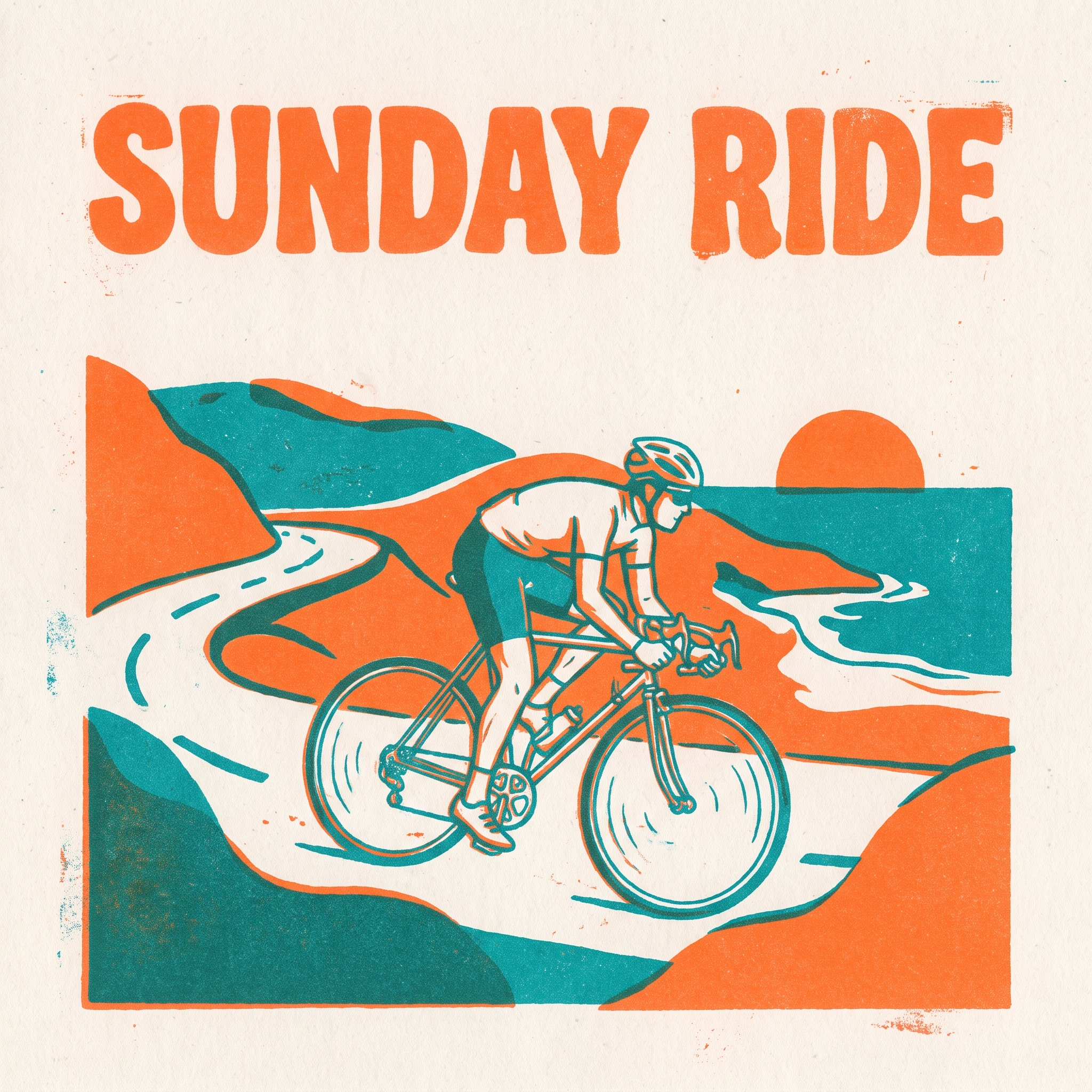
Illustrative example, not made with Iris-3B Turbo: generated for this issue with beehiiv's Gemini-based image tool from the prompt below. Your Turbo result will differ.
Size: 1024 × 1024
A square two-color risograph poster in fluorescent orange and teal on off-white paper, with visible riso grain and slight misregistration. A cyclist rides a vintage road bike along a winding coastal road past rolling hills and a low sun. The words "SUNDAY RIDE" are printed in big chunky rounded capitals across the top. Bold shapes, simple composition, playful mid-century feel.
Why it works: Riso grain is a texture you ask for on purpose, so it disguises the faint speckle Turbo can add to flat backgrounds instead of fighting it.
Try it: Iris-3B Turbo demo (Hugging Face) · Iris-3B on GitHub
What to check in your result
Read SUNDAY RIDE letter by letter. If a letter slips, run it again with the same seed and a slightly different word order rather than a new seed.
One variation to try
Change the two words (NIGHT SWIM, FIRST FROST) and the scene to match, and keep the two-ink palette line.
3. A product shot to iterate on
Speed makes Turbo a sketchpad for product angles: run it, change one phrase, run it again.
The exact prompt
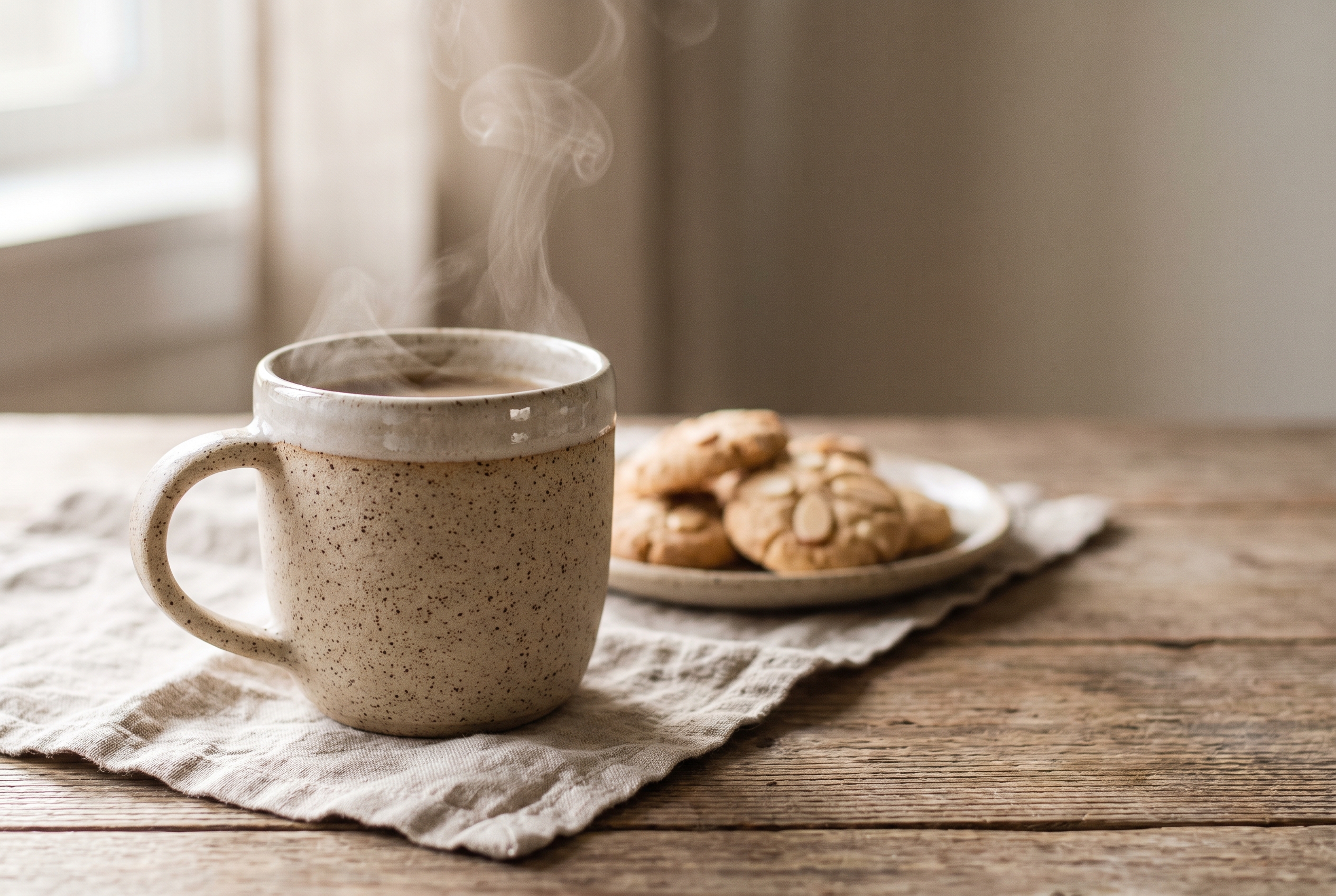
Illustrative example, not made with Iris-3B Turbo: generated for this issue with beehiiv's Gemini-based image tool from the prompt below. Your Turbo result will differ.
Size: 1344 × 896 (landscape)
A horizontal product photograph of a handmade speckled oatmeal-colored ceramic mug with a thick glossy rim, steam curling from hot coffee, on a crumpled natural linen cloth on a wooden table. A small plate of almond biscuits sits behind it, out of focus. Soft morning window light from the left, gentle shadows, warm neutral palette, 85mm lens, shallow depth of field, clean empty space on the right. No text, no logos.
Why it works: The empty space on the right is written into the prompt, so the shot comes out ready for a headline or a price.
Try it: Iris-3B Turbo demo (Hugging Face) · Iris-3B weights
What to check in your result
Check the rim and handle for warping and make sure the empty space really is empty. Speckle on the glaze is wanted; speckle on the backdrop isn't.
One variation to try
Replace the mug with a short description of your own product and try three camera phrases in a row: "from directly above", "at eye level", "on dark slate".
A quick check before you run it
- Pick one of the seven trained sizes. Others may work, but these are the shapes the model learned.
- Keep text to a few big words. Save paragraphs and fine print for a slower model.
- If two seeds look alike, rewrite one detail instead of rolling again.
- Label realistic AI images where a platform asks you to.
Make one of these yours
Pick one prompt and change only the subject first. Once that works, change the light.
When you share it in the community, include the result, the full prompt, the size and the seed.
Source Desk
All three prompts are original Luxe editorial work written for this October 2026 issue. Model facts come from Speridlabs' Iris-3B model card and GitHub README, the Hugging Face commit history for the Turbo weights (October 12, 2026), reporting by AITrending, ArtRealmAI (October 13) and InferenceKey (October 12), and Qwen's Qwen-Image-2.1 repository (Turbo release October 9). Speed figures are Speridlabs' own. Example images are illustrative and were not generated with Iris-3B Turbo.
Iris-3B weights · Iris-3B on GitHub · Iris-3B Turbo demo (Hugging Face) · AITrending: Turbo checkpoint · Qwen-Image-2.1-Turbo
A clearer brief. A more useful result.