
 LUXE PROMPTING
ORIGINAL LUXE COMPOSITION WORKSHOP
5 AI Image Prompts for Stronger Focal Points
A detailed image can still be hard to read. These five original Luxe prompts explore empty space, a natural frame, warm light, graphic shapes and a clear silhouette. Each comes with its recorded image and a small exercise for deciding what the viewer should notice first.
Sponsored
Learn AI in 5 minutes a day

You don't have to scroll every AI thread, track every new tool, or watch every demo.
The Rundown AI breaks it all down for you — the latest AI news, tools, and tutorials in one free 5-minute email every morning.
Trusted by 2M+ professionals at Apple, Google, and NASA.
The Short Version
- Copy five complete original briefs with their matching archive images.
- Choose one focal point before adding background detail.
- Judge each revision at its intended display size, then inspect the small details.
Start with a first-look test
Look at an image for a moment, then describe the first thing you noticed. Compare that answer with the intended subject. A focal point can come from color, brightness, scale, shape or empty space; adding detail everywhere may weaken all of them.
The images below are recorded originals, not results of the proposed revisions. Choose one brief and save a baseline. Change only the named composition detail, keeping other settings consistent where your tool allows. Treat the comparison as a practical exercise, not a controlled model benchmark.
1. A yellow raincoat with room for a headline
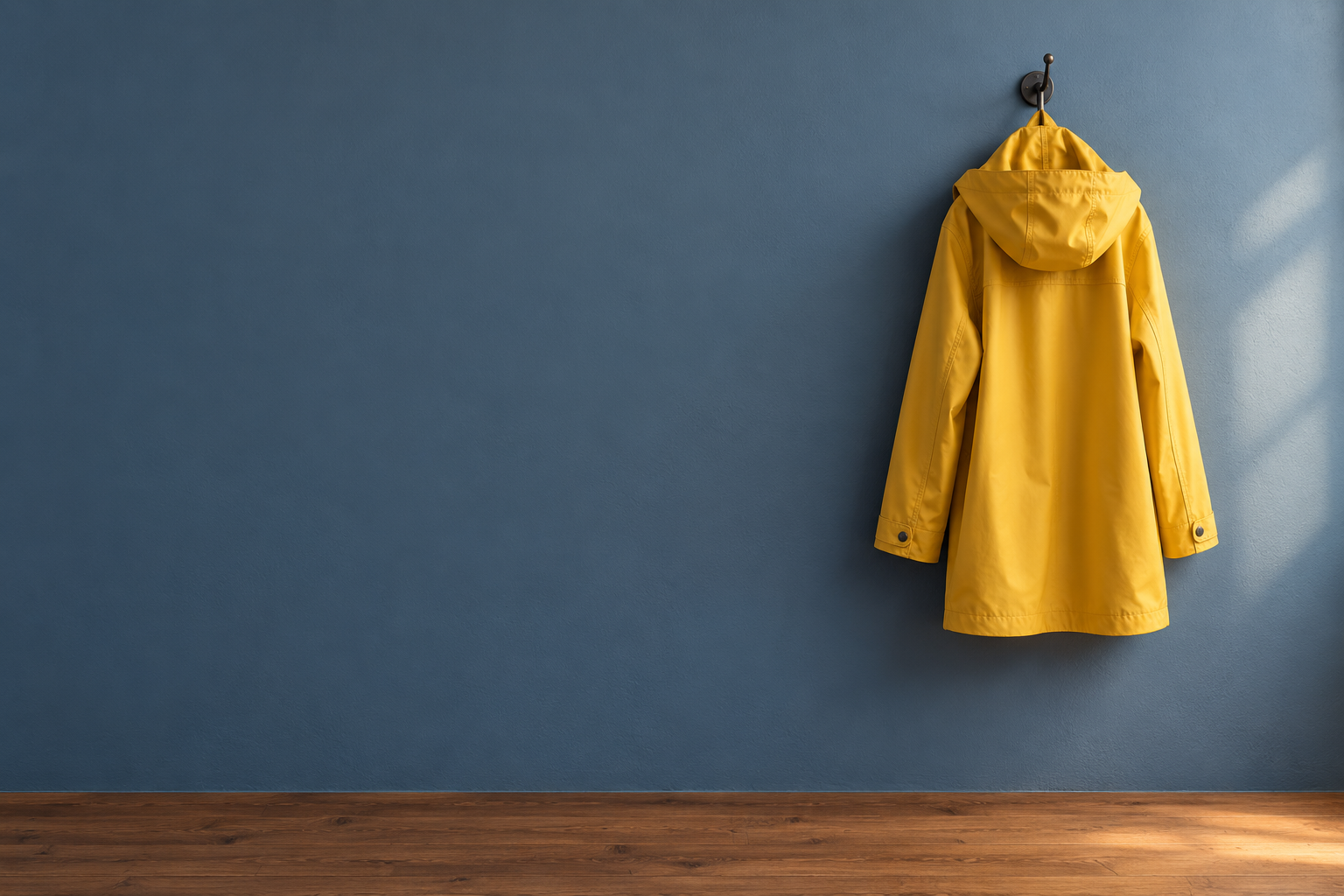
Original Luxe archive image. The complete recorded generation prompt follows.
Create an editorial interior photograph with a horizontal 3:2 composition. A single bright mustard-yellow raincoat hangs from one small dark metal wall hook in the right third of a quiet entryway. The raincoat has a readable hood, two relaxed sleeves and a simple straight hem, with a small amount of natural fabric folding. Leave the entire left half as an uninterrupted matte slate-blue plaster wall, evenly toned and free of objects, fixtures, patterns or strong shadows, suitable for adding a headline later. Show a narrow strip of warm wooden floor along the bottom. Soft morning window light enters from outside the frame on the right and gently shapes the coat. Keep comfortable space around the garment. Calm contemporary editorial styling, eye-level camera, realistic fabric texture, restrained colors, no person, no extra coat, no shoes, no furniture, no lettering, no logo, no watermark.
Read the result
The coat sits clearly on the right while the left wall stays free of objects. Light still creates a gentle tonal change across the plaster, despite the request for an even surface. The broad empty area is useful, but it needs a real text-placement check.
One revision to try
Place a short sample headline on a copy of the image. If a word lands across a distracting light change, revise only the wall lighting or text position. Keep an untouched original for comparison.
Your quality check
Check the actual crop you intend to use. A square crop may consume the left-hand space that works in this wide frame.
2. A walnut market framed by its own shell
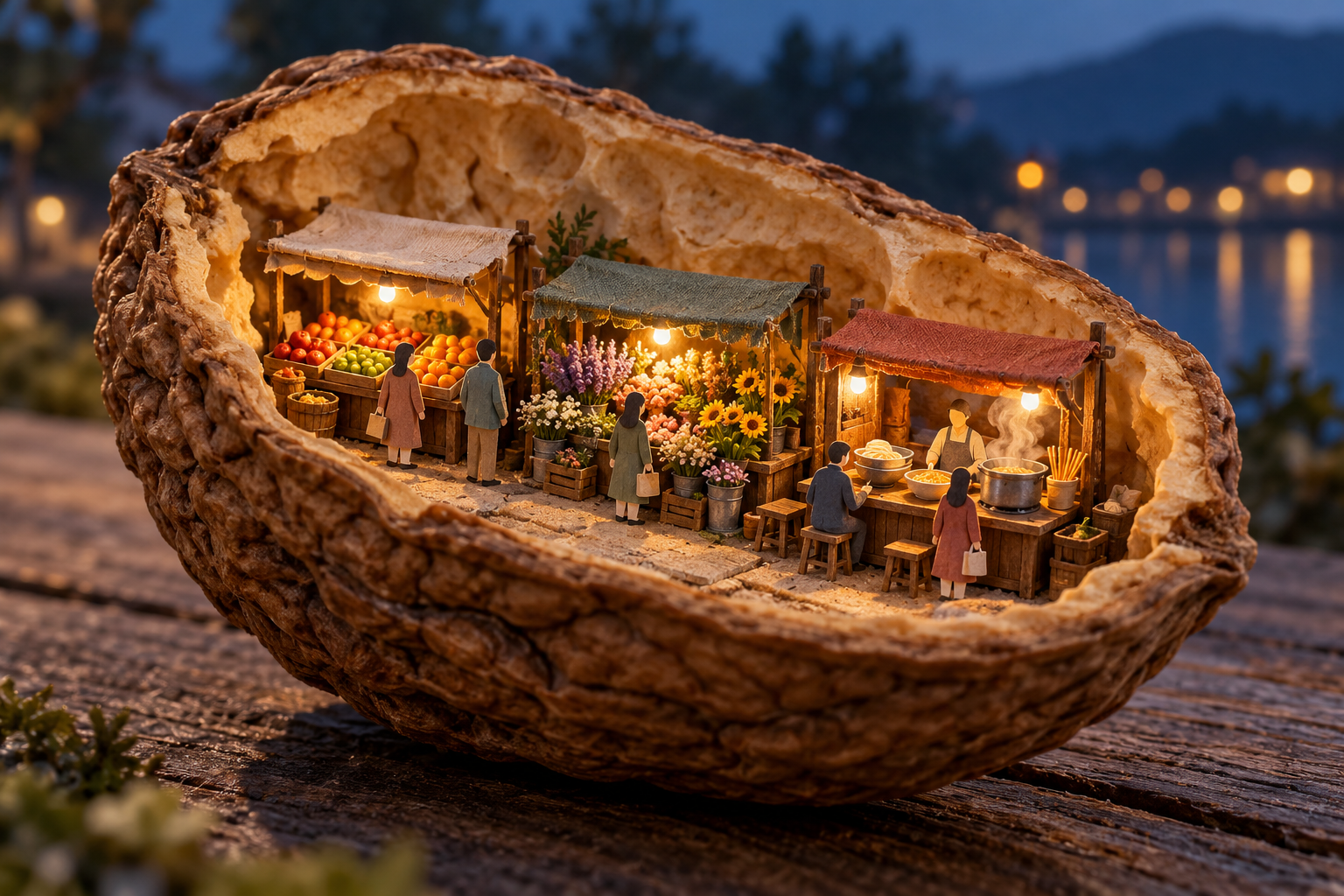
Original Luxe archive image. The complete recorded generation prompt follows.
Create a carefully built miniature night market inside one open walnut shell, photographed as a real tabletop diorama. Three tiny stalls follow the natural curve of the shell: a fruit stall, a flower stall, and a noodle stall with a delicate wisp of steam. Include small hand-cut canvas awnings, wooden crates, and a few tiny faceless paper shoppers for scale. The walnut shell itself must remain unmistakable, with a rough brown exterior and pale ridged interior. Use a three-quarter macro camera angle and a horizontal 3:2 composition. Warm amber pin lights illuminate the stalls against a quiet cool-blue dusk background. Keep the whole walnut and all three stalls in focus, with the distant background softly blurred. Tactile handmade materials, restrained detail, believable contact shadows. No readable signs, no logos, no watermark.
Read the result
The shell forms a readable border around three lit stalls. Fruit, flowers and a steaming food counter give each stall a distinct role. The background includes a waterfront scene and several lamps, adding more context than the requested quiet blue backdrop.
One revision to try
Keep the shell, three stalls and warm bulbs. Replace only the distant scene with a plain cool-blue blur. Compare whether the market remains lively while the outer silhouette becomes easier to read.
Your quality check
Shrink the image until the stalls become small shapes. The shell should still read as a walnut, not an unrelated bowl.
3. A lit laundromat inside a quiet desert frame
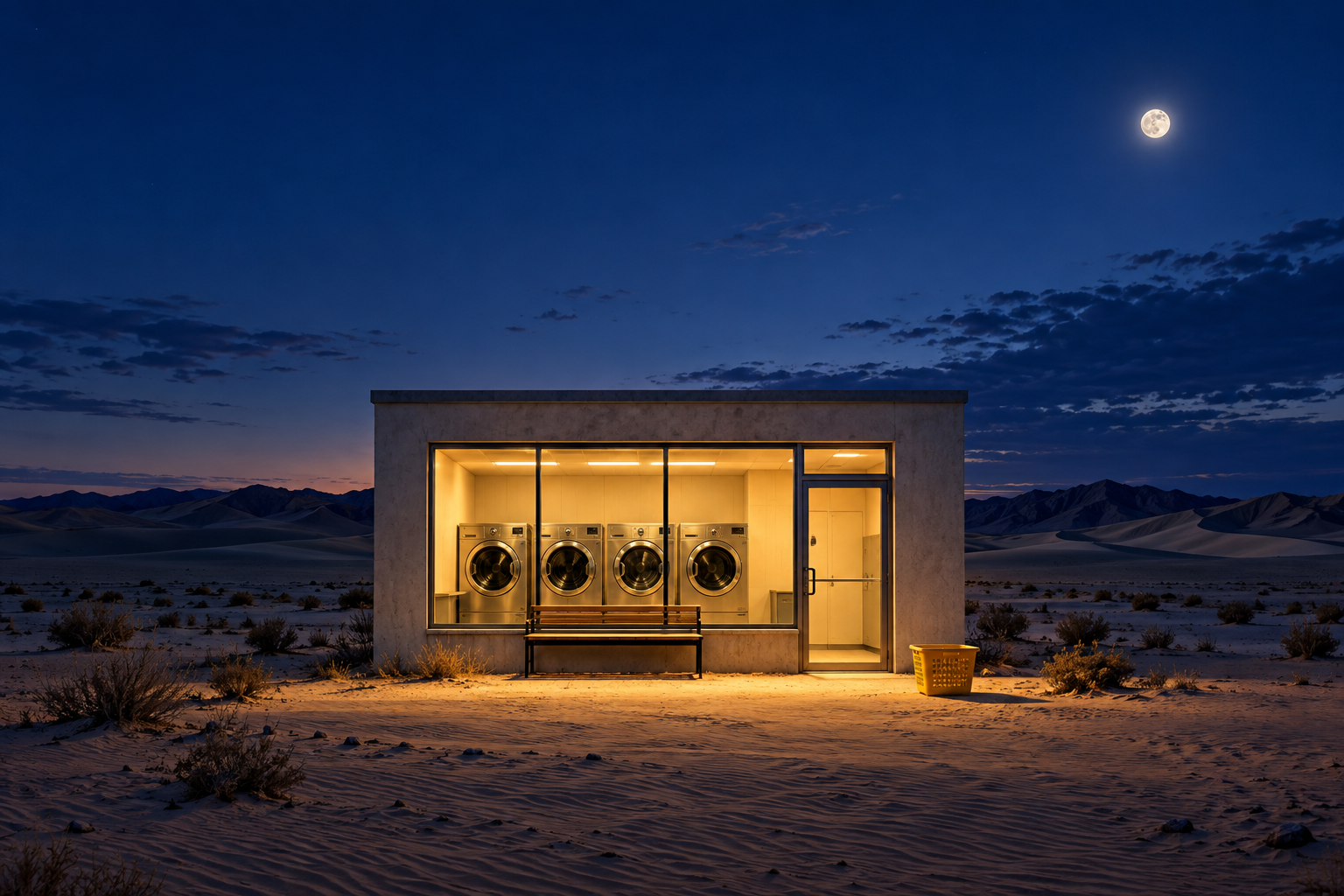
Original Luxe archive image. The complete recorded generation prompt follows.
Create a cinematic architectural photograph of a tiny standalone laundromat in a vast empty desert at blue hour. The low rectangular building has a wide front window revealing exactly four round washing-machine doors in a single row and one simple bench. A single empty yellow laundry basket rests on the sandy ground outside the door. Frame the building in the lower middle of a horizontal 3:2 image, leaving generous dark-blue sky above and desert on both sides. Warm light spills from the interior onto the sand; soft cool moonlight defines the roof and distant dunes. Straight architectural lines, plausible window reflections, fine wind-shaped sand, quiet surreal atmosphere, realistic materials. No people, no cars, no neon words, no signage, no logos, no watermark.
Read the result
Four round machine doors are visible through the bright window, with a yellow basket outside. The large cool sky makes the warm interior easy to find. A prominent moon and scattered plants add secondary details beyond the simplest reading of the brief.
One revision to try
Keep the building and interior light. Make one comparison with an empty upper sky, leaving the moon out. Judge whether the building becomes the clear first stop without losing the sense of night.
Your quality check
Count the machine doors separately from checking the mood. A convincing atmosphere cannot confirm an exact-count instruction.
4. A reef library organized by big graphic shapes
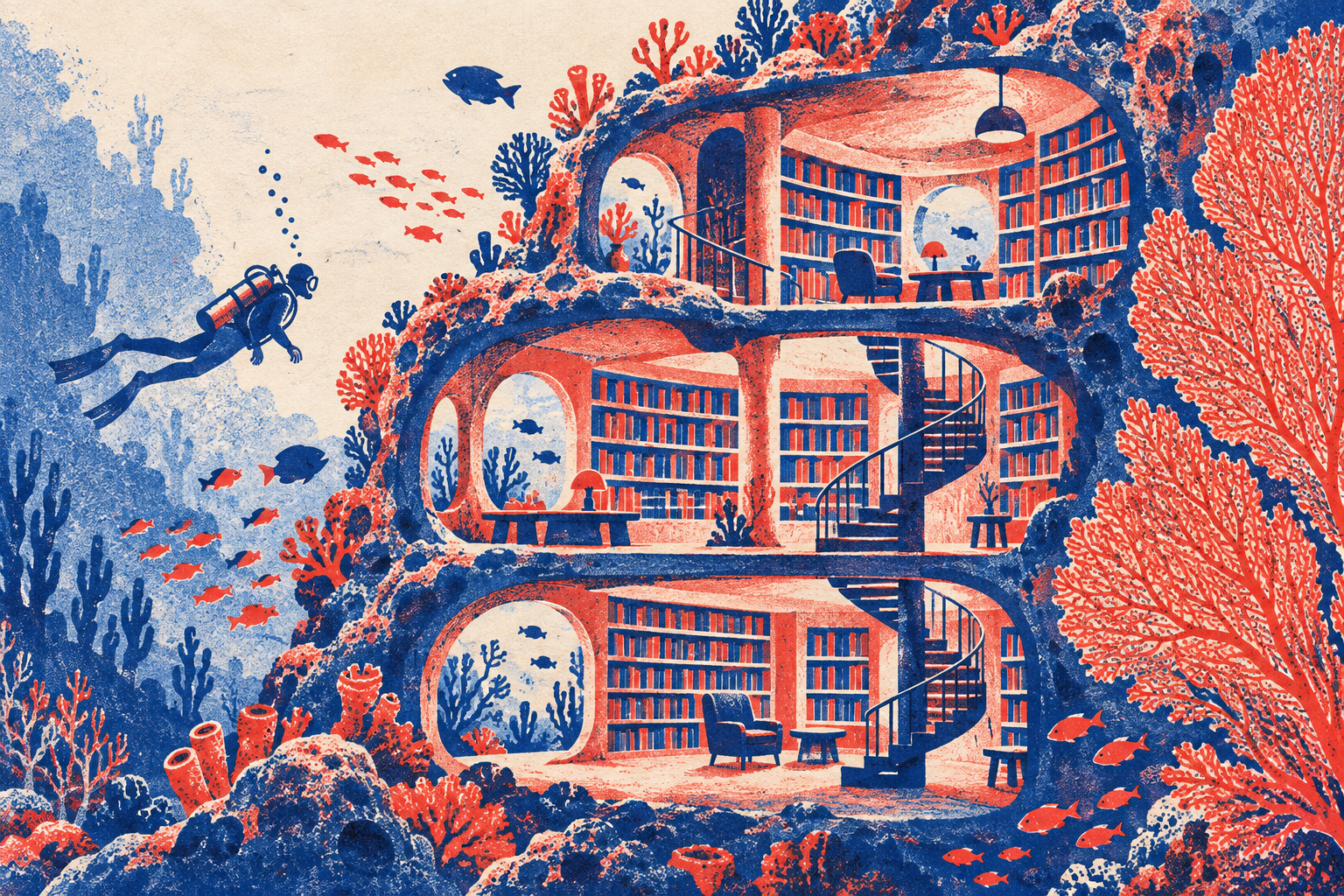
Original Luxe archive image. The complete recorded generation prompt follows.
Create a two-color risograph-style editorial illustration of an imaginary underwater library built into a coral reef. Show a clear side-view cutaway: three stacked rooms with curved bookshelves, a spiral stair connecting them, and one small diver swimming diagonally past the open entrance. Fish weave around the exterior while a large sea fan frames one edge. Use only deep ultramarine blue and warm coral red inks on textured ivory paper; overlaps can create a darker third tone. Horizontal 3:2 composition, bold simplified shapes, visible print grain, slight ink-registration offsets, no photographic gradients. Keep the architecture and diver easy to read at newsletter size. The books have plain spines without lettering. No words, logos, watermark, or recognizable existing characters.
Read the result
Three rooms and the connecting stair remain readable in coral and blue. The diver sits against a relatively open pale patch on the left. Dense reef texture around the rooms gives the print energy, but also creates many competing edges.
One revision to try
Keep the three-room cutaway and diver. Reduce only the coral detail around the entrance. Compare whether the eye can move from swimmer to doorway to stair in a clear sequence.
Your quality check
View the image at newsletter width. If room boundaries vanish into the surrounding reef, simplify the boundary before adding more texture.
5. A moth with space around its wings
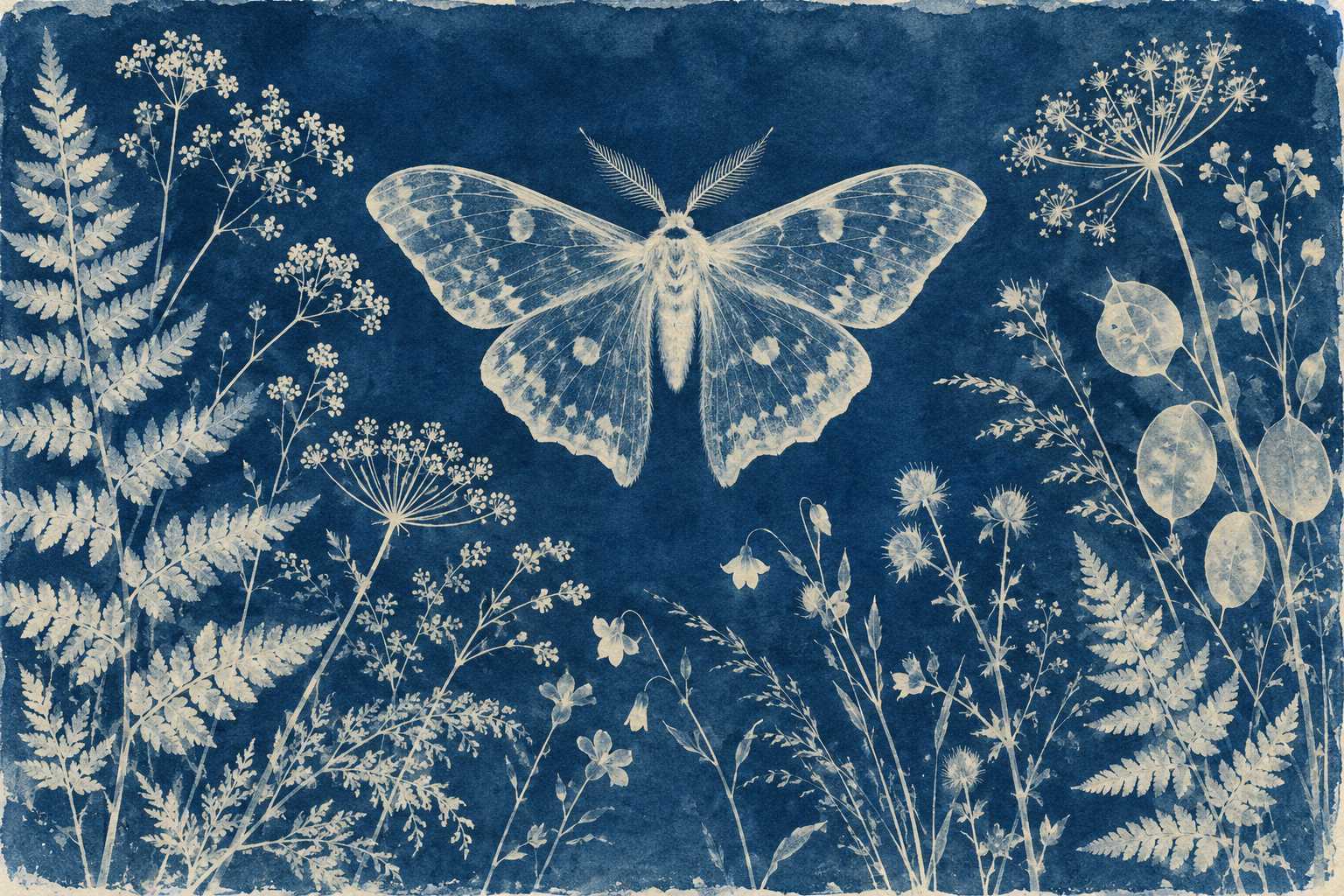
Original Luxe archive image. The complete recorded generation prompt follows.
Create an original cyanotype-style botanical art print on visibly textured paper. Place one large moth with symmetrical open wings slightly above the center, surrounded by asymmetrically arranged fern fronds, seed heads, and slender wildflower stems. Use deep Prussian blue for the exposed paper and luminous pale ivory for the botanical and moth silhouettes, with fine vein details and gently imperfect contact-print edges. Leave a clear breathing space around the moth so its wing shape remains distinct from the surrounding foliage. Horizontal 3:2 composition, handmade photographic print character, delicate tonal variation within the blue, flat paper surface, no frame or room mockup. No lettering, no symbols, no logo, no watermark.
Read the result
The pale moth sits above center with a distinct wing silhouette against deep blue. Ferns and stems frame it unevenly, creating the requested asymmetry. The dense lower foliage remains secondary because the wing outline has space around it.
One revision to try
Keep the moth size and position. Try a version with fewer stems in the lower third. Compare the silhouette first, then decide whether the quieter border improves the intended print.
Your quality check
Trace the wing tips at thumbnail size. They should stay distinct from nearby stems without requiring a zoom.
Three checks before you keep a revision
First look
Does the intended subject stand out when the image is small? Check this before deciding whether the texture is impressive.
Working crop
Use the actual newsletter, square or portrait crop you need. Make sure the subject and any copy space survive it.
One preserved strength
Name the feature the original already did well. Reject an edit that solves a minor distraction but loses that feature.
Keep useful evidence, not just the favorite image
Save the original prompt, the unchanged baseline and the revised result together. Add one sentence explaining the visual change you were trying to achieve. A rejected version can be useful later if its note explains why the hierarchy became less clear.
When posting your own experiment, include the complete prompt and label any crop, reference image or later edit. That lets another creator study the actual decisions behind the picture instead of guessing from a polished final alone.
Source Desk
The five prompts and images are original Luxe archive work. Exact prompt recipes and byte-matched original images are preserved locally with their upload receipts. These are curated composition examples, not recent Facebook originals, a weekly ranking or evidence of guaranteed improvement. The reef illustration and miniature are imaginative scenes.
A clearer brief. A more useful result.