
In partnership with

 LUXE PROMPTING
LUXE ORIGINAL PROMPT WORKSHOP
5 imaginary places worth prompting
Invented architecture becomes more convincing when the entrance, scale and materials make visual sense. These five original Luxe prompts explore different places and illustration styles, from a quiet tidal post office to a tiled music pavilion. Use the exact briefs, inspect the generated results and change one design choice at a time.
Some teams never seem to stop moving. They're on Attio, the agentic CRM.

Every customer signal is captured in one shared context layer, always current and compounding. Agents and workflows build pipeline, chase every buying signal, and move deals forward, an always-on revenue engine running alongside your team.
With Attio, you’ll get:
Leads automatically prioritised and routed to the right rep
Expansion and risk signals caught the moment they land
Follow-ups written in your voice, already there when you arrive
Teams like Parallel, Turbopuffer, and Wordsmith build on Attio. Are you one of them?
The Short Version
- Five complete original prompts, each paired with its own generated illustration.
- A varied mix of settings, materials, light and composition.
- One concrete variation per scene, with result observations kept separate from the prompt.
How to use these prompts
Start with the scene that matches the kind of image you want to make. Copy its complete prompt as written for a first attempt, then compare the result with the visible requirements: subject, viewpoint, materials and connections. Different tools and repeat runs may interpret the same brief differently.
After the first result, change one instruction with a clear purpose. The variation beneath each image is an exercise, not a claim that we generated or measured that comparison. Keep your prompt and result together so you can tell what actually improved.
1. A post office above the tide
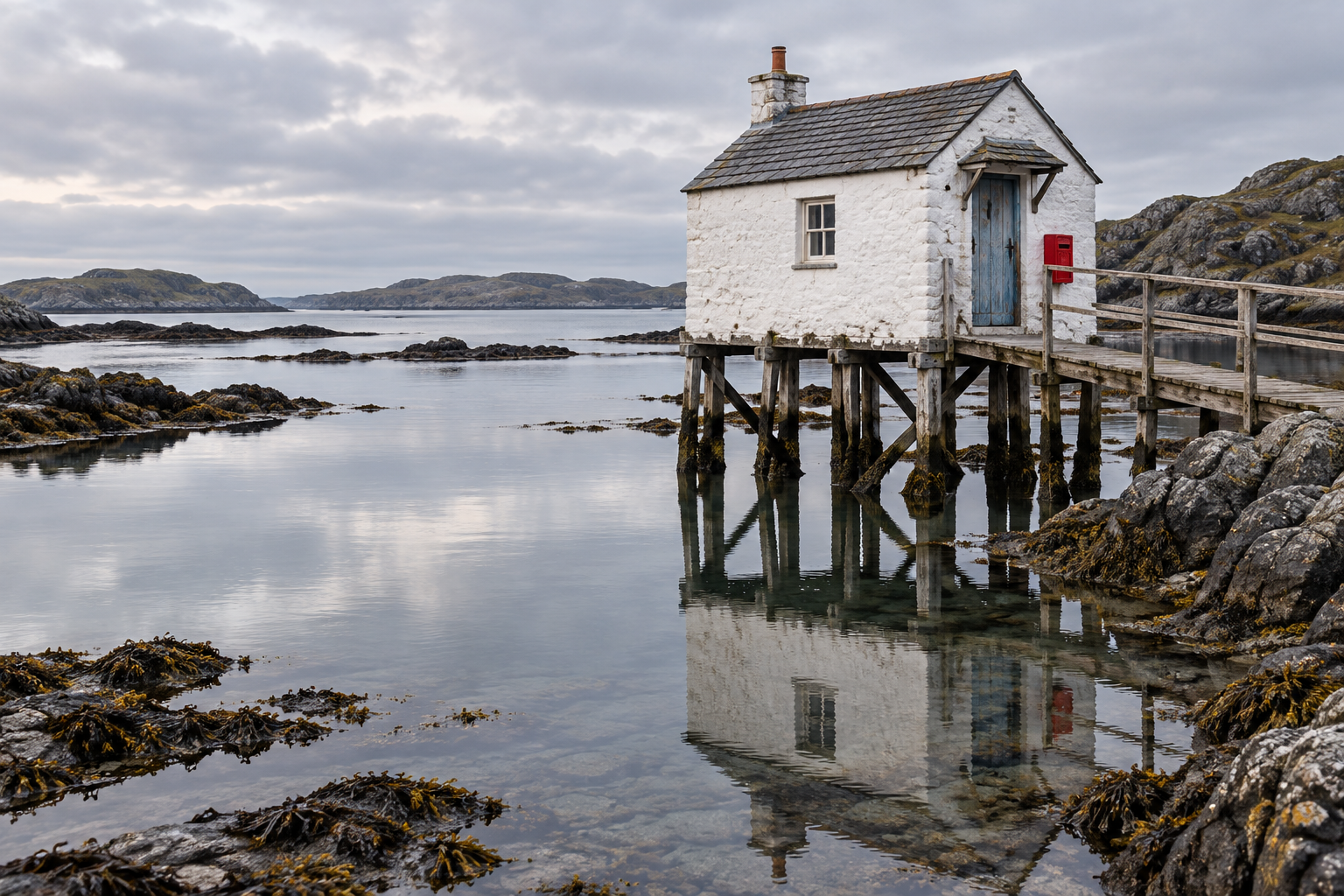
Original Luxe editorial illustration generated from the exact prompt below.
A small bridge explains how the building is reached, while exposed rocks establish the tide level. Those connections matter as much as the coastal mood.
The result gives the post office a visible bridge, stilts and reflection, with open water on the left as requested. The supports are heavier than the brief's slender timber description; use a lighter-support instruction if you want a more delicate concept.
Copy the complete prompt
Create a landscape 3:2 architectural concept photograph of a fictional tiny post office standing on slender timber stilts above a calm coastal tidal pool. The building is simple, with white limewashed walls, a weathered blue door, one small window and a narrow wooden access bridge from the rocky shore. Include a modest unlettered red post box beside the door. Use a distant three-quarter view at low tide under soft overcast daylight; reflections and exposed dark rocks establish the water level. Restrained slate, chalk and muted blue colors, believable timber connections and a clear path to the entrance. The building should occupy the right half with open reflective water on the left. No people, readable signs, logos or watermark.
One change to try
Keep the building and camera position, but ask for a pale evening sky instead of overcast daylight. Inspect whether the bridge and waterline remain clear.
2. A bus shelter folded from paper
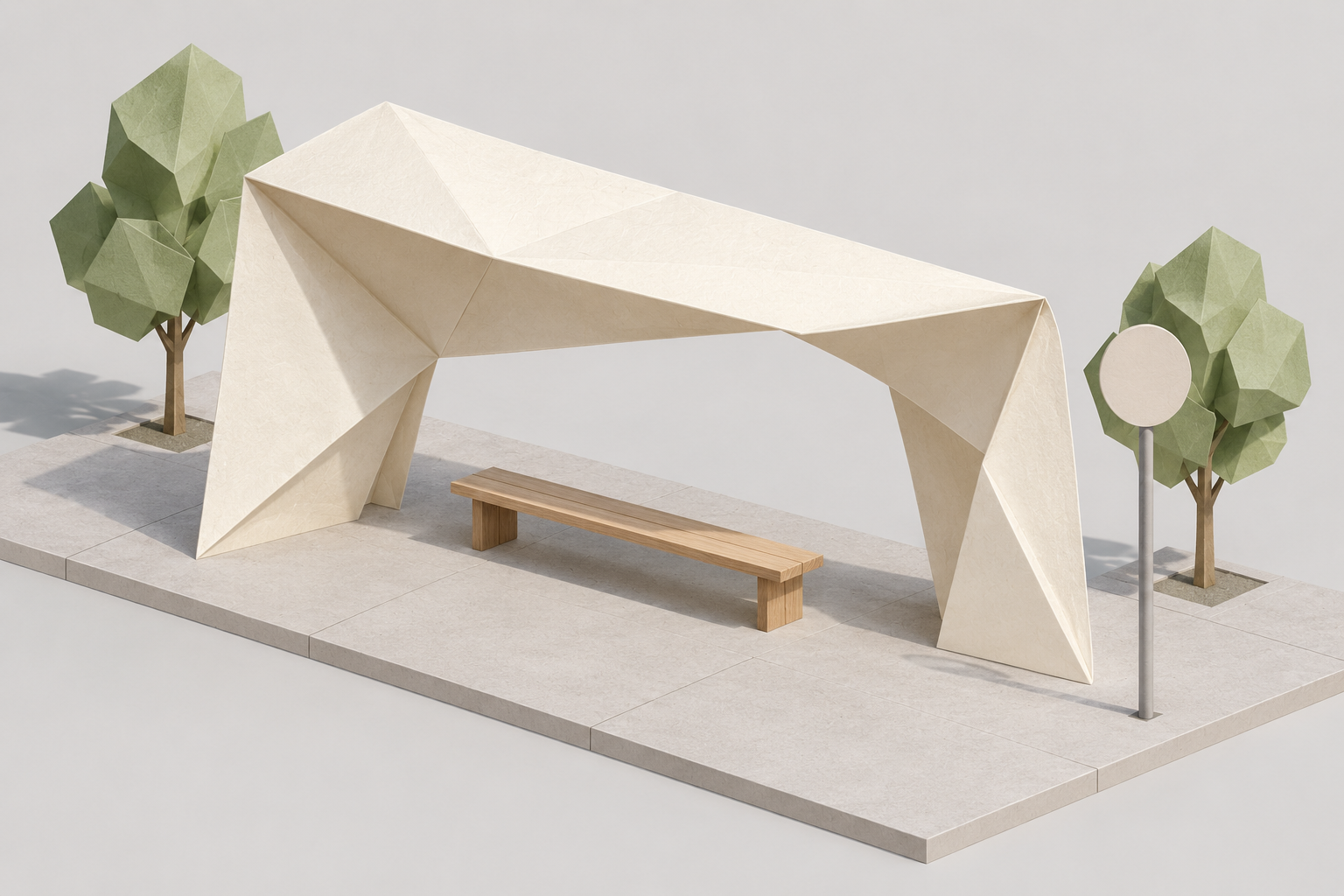
Original Luxe editorial illustration generated from the exact prompt below.
One continuous folded form gives the shelter a simple design rule. The bench and marker show its purpose without relying on generated lettering.
The shelter reads as a connected folded form, with a visible bench and blank circular marker. The material has a thicker, more architectural appearance than a single thin paper sheet; stronger emphasis on thin edges could make a later version feel more handmade.
Copy the complete prompt
Create a landscape 3:2 architectural illustration of a fictional bus shelter made from one enormous folded sheet of warm ivory paper in a quiet urban square. The folded roof and two supports must read as a single continuous origami form, with subtle creases and softly visible paper texture. Place one simple timber bench underneath and a single plain circular bus-stop marker nearby, without lettering. Render as a clean isometric cut-paper model with soft midday studio shadows on a pale gray base; add two small sage-green paper trees for scale. Keep the shelter entrance clear, the bench fully visible and the composition spacious. No vehicles, people, writing, logos or watermark.
One change to try
Ask for a low frontal view instead of an isometric model. Keep the continuous-paper constraint and check whether the roof still appears connected to its supports.
3. A city roof with a citrus orchard
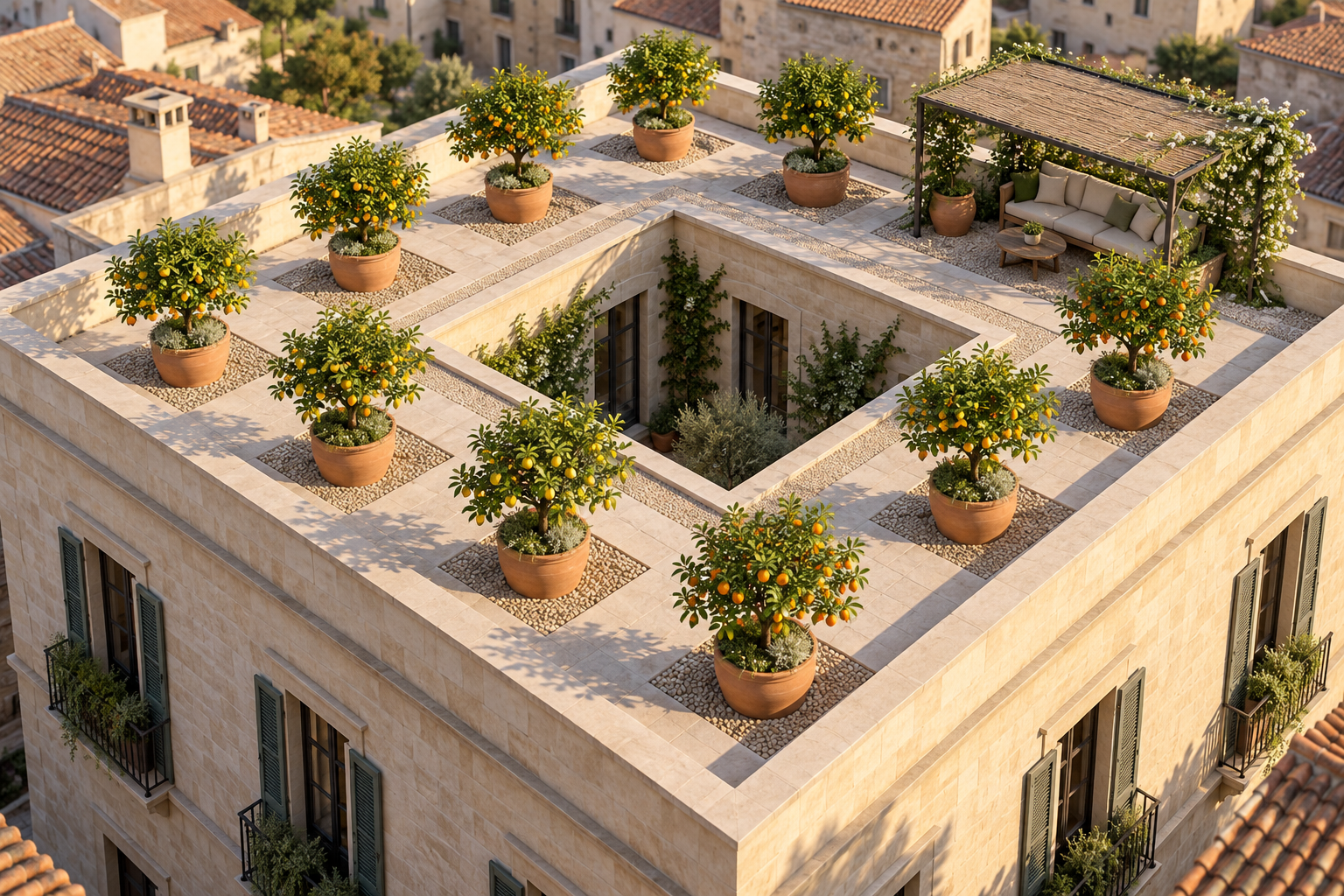
Original Luxe editorial illustration generated from the exact prompt below.
The roof plan is the story. Connected paths, a visible courtyard and contained planting help the viewer read the layout without pretending this is a buildable engineering proposal.
The generated view clearly shows contained citrus planting, connected walking space and a central courtyard. It does not clearly satisfy the exact request for twelve planters. Treat the arrangement as visual inspiration; the image does not establish structural loading, safe edges or a buildable roof design.
Copy the complete prompt
Create a landscape 3:2 aerial editorial photograph of a fictional compact city courtyard building whose flat roof contains an orderly miniature citrus orchard. Show a square pale-stone roof around a small central open courtyard, twelve evenly spaced large terracotta planters with small fruiting citrus trees, a simple walking path and one shaded seating nook. Use a high oblique viewpoint that reveals the roof layout and part of two exterior walls, warm early-morning light and believable short tree shadows. Surrounding rooftops remain simple and subordinate. The roof must look level, the paths connected and the trees visibly contained in planters. This is an imaginative architectural illustration, not a construction plan. No people, text, logos or watermark.
One change to try
Reduce the requested planters from twelve to eight. Count the actual result and check whether the walking route becomes easier to follow.
4. A tea pavilion at blue hour
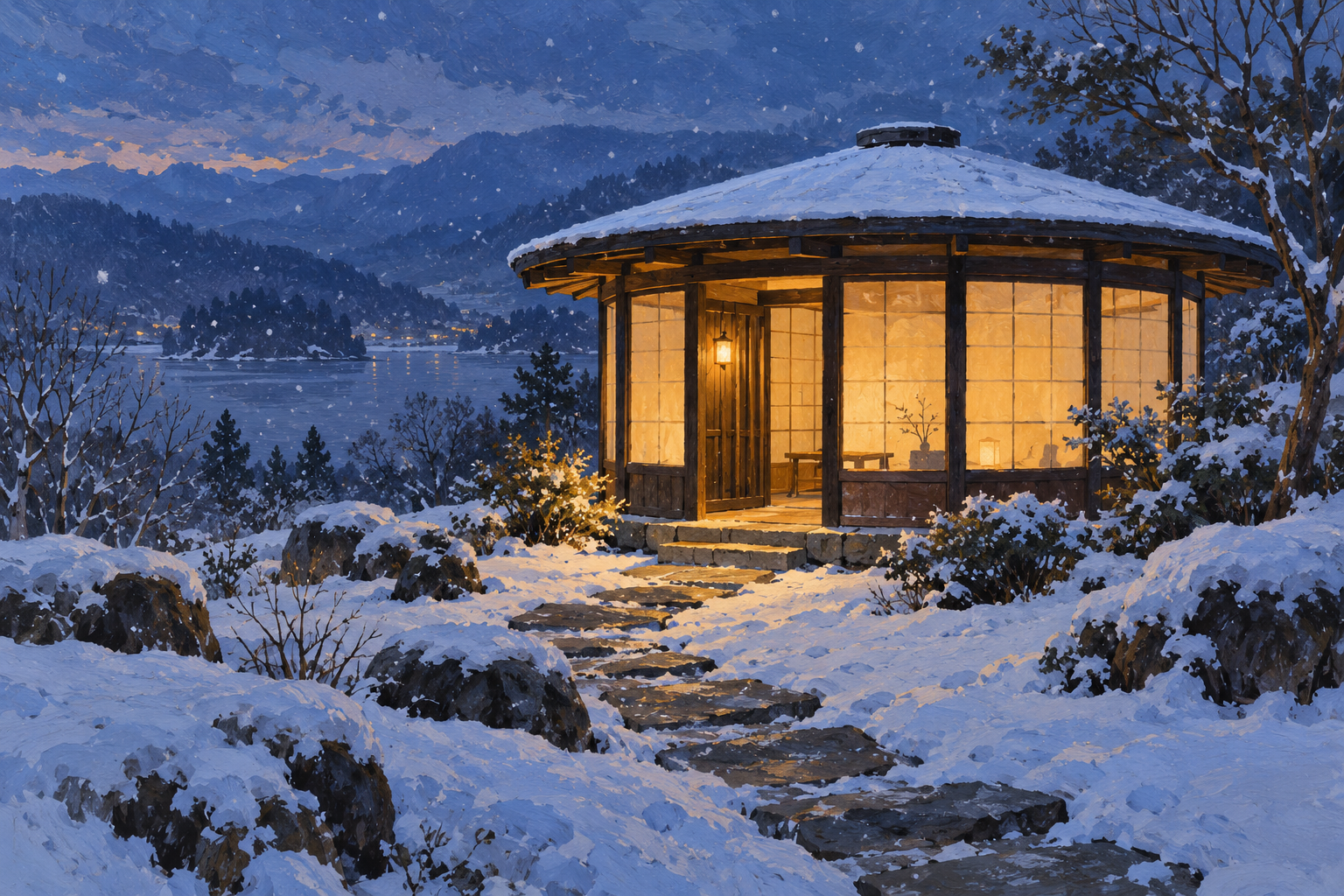
Original Luxe editorial illustration generated from the exact prompt below.
Warm window panels can define a welcoming interior without showing a detailed room. The doorway and short path keep the glowing building grounded in its landscape.
Warm windows, a visible entrance and the snowy path make the pavilion easy to read. The result adds a lakeside setting beyond the requested hills, while keeping the blue-hour and warm-interior contrast.
Copy the complete prompt
Create a landscape 3:2 gouache architectural painting of a fictional small circular tea pavilion in a snowy landscape at blue hour. The building has a dark timber frame, broad translucent paper-like window panels and a shallow curved roof capped with a thin layer of snow. Warm golden light glows gently through the windows, contrasting with the cool blue snow and distant indigo hills. Show a clear short stone path leading to a single visible doorway. Use a low eye-level three-quarter view, confident broad brushwork, restrained detail and soft falling snow. Keep the building modest and inviting, with a realistic grounded shadow and no floating elements. No people, lettering, logos or watermark.
One change to try
Keep the pavilion and lighting, but remove falling snow. Compare whether the quieter sky makes the roofline and warm windows easier to read.
5. A mosaic music pavilion by the sea
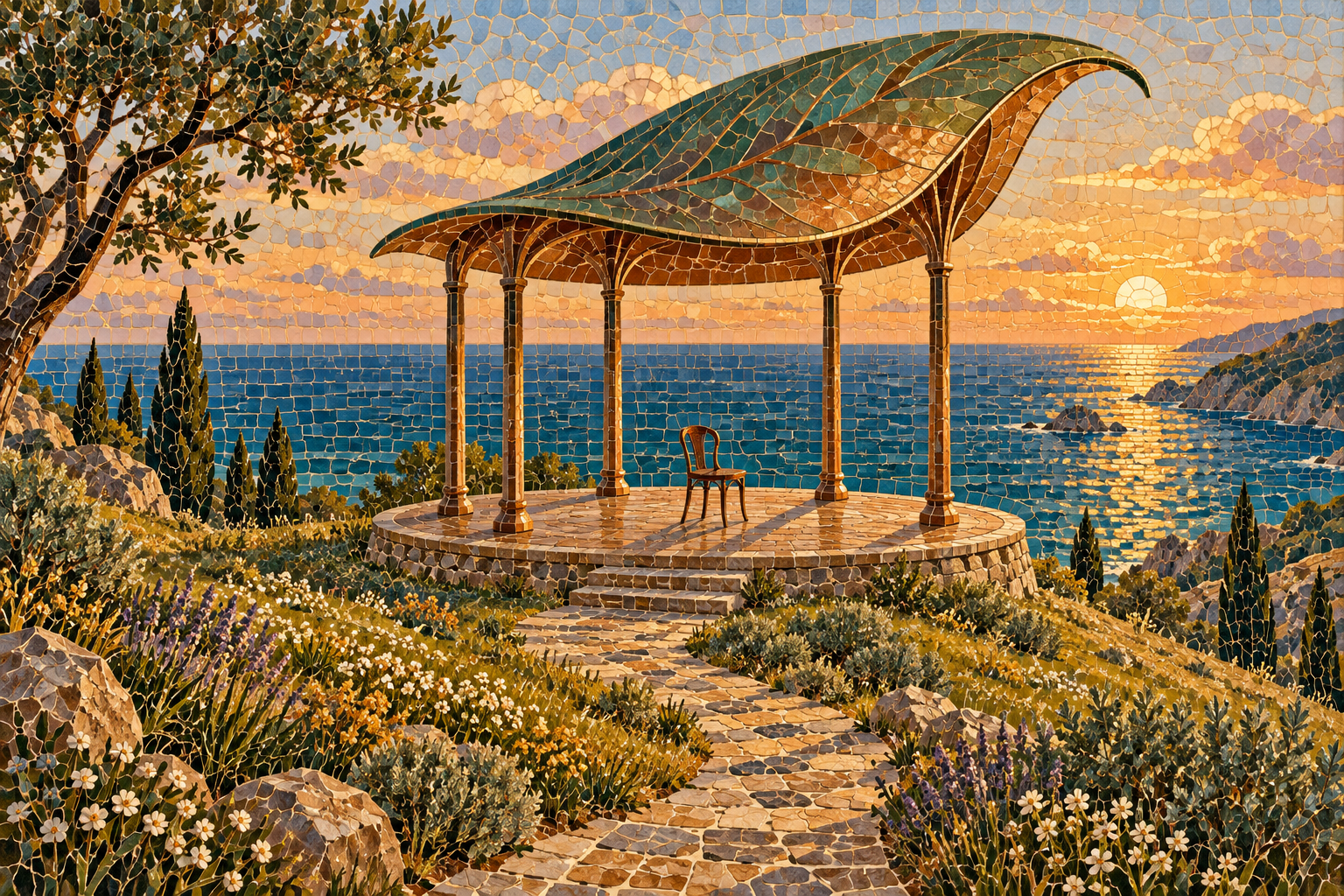
Original Luxe editorial illustration generated from the exact prompt below.
The tile medium changes how light and detail are described. Keep the structural silhouette simple so decorative fragments do not dissolve the platform or columns.
The mosaic treatment keeps the leaf-shaped roof, empty chair and coastal path readable. Only five columns are clearly visible, and the platform appears stone-clad rather than timber. Those misses offer specific revisions if column count or material is central to your brief.
Copy the complete prompt
Create a landscape 3:2 mosaic-style illustration of a fictional open-air music pavilion on a grassy hill above the sea. Build the image from small irregular ceramic tile shapes with visible pale grout. The pavilion is a simple circular timber platform with six slender columns and a sweeping leaf-shaped copper roof, open on all sides. A single empty wooden cello chair stands at the center, without instruments or people. Use a slightly elevated frontal composition, late-afternoon golden light suggested through warm tile colors, deep teal sea and pale peach clouds. Keep the platform edge, all supporting columns and the path up the hill visually coherent. Decorative but readable architectural storytelling. No text, logos or watermark.
One change to try
Replace the peach cloud palette with pale ivory while keeping the teal sea and copper roof. Inspect how the quieter sky changes the pavilion’s contrast.
Keep the useful part of the experiment
Choose one scene and save a first result before making changes. Record the exact wording you changed and one visible difference you can point to. A result can be useful even when it misses a detail; the miss tells you what to clarify next.
These are original creative exercises, not the top posts from a community ranking. If you share your own result with a group, include the full prompt, the tool you used and any later edits so other people can understand and learn from the image.
Source Desk
Original Luxe Prompting editorial prompts and AI-generated illustrations prepared September 30, 2026. These are creative exercises, not member submissions, a popularity ranking or a model comparison. The full prompt beside each image is the exact brief used to generate it. Results may vary across tools and subsequent runs.
A clearer brief. A more useful result.