|
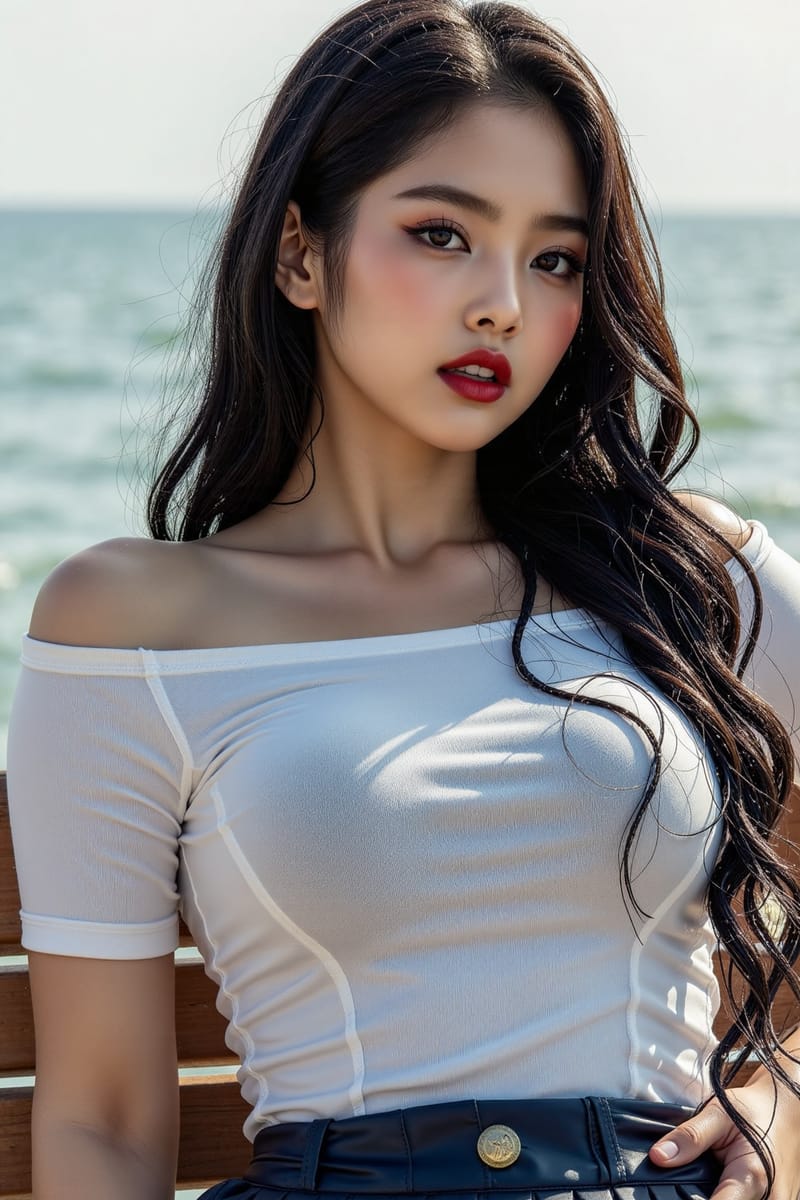
Same subject. Same AI model. Two different prompts. The first says “a realistic portrait of a woman in a cafe.” Flat, centered, airbrushed, instantly AI. The second says “shot on Fuji X-T5 with an 85mm f/1.4, golden hour window light from the left, Kodak Portra 400 film grain, rule of thirds, espresso in the foreground slightly out of focus.” The output is a photograph.
The difference is vocabulary. AI models were trained on millions of photographs captioned with technical metadata. When you name a lens, the model pulls from images shot with that lens. It does not simulate cameras. It matches visual patterns associated with those words. The word “realistic” does almost nothing. The phrase “85mm f/1.4, Rembrandt lighting, Portra 400” does everything.
Below are 10 categories. Each opens with a quick reference showing every option at a glance, followed by individual entries with copy-paste prompt phrases. Save this email.
|
|
Category 1 · Lenses
The single most impactful detail you can add.
|
|
8mm fisheye · 14mm ultra-wide · 16mm vlog · 24mm wide · 28mm street · 35mm · 40mm pancake · 50mm · 70mm short tele · 85mm portrait · 100mm macro · 105mm macro · 135mm fashion · 200mm telephoto · 300mm super tele · tilt-shift · anamorphic · pinhole · Lensbaby
|
|
Focal length controls perspective, distortion, and background separation. Wide lenses exaggerate depth. Telephotos compress everything flat. Naming the lens changes how AI renders space.
|
|
8mm fisheye Extreme 180° barrel distortion. Curved horizon. Everything bends at the edges. Skateboarding, action sports, surreal effects, VR-style perspectives.
→ shot on 8mm fisheye lens, extreme barrel distortion, curved horizon, 180-degree field of view, immersive
14mm ultra-wide Dramatic perspective without fisheye curve. Vertical lines converge inward. Buildings lean, ceilings soar. Architecture, real estate, vast landscapes.
→ shot on 14mm ultra-wide rectilinear lens, dramatic converging perspective, deep depth of field, expansive
16mm The vlogging and action camera lens. Wider than 24mm but more controlled than 14mm. Captures the subject plus their full environment. Popular in YouTube, travel docs, and behind-the-scenes content.
→ shot on 16mm wide angle, immersive environmental framing, slight wide-angle perspective, vlog feel
24mm wide angle The photojournalism and documentary lens. Captures environment around the subject without extreme distortion. Puts the viewer inside the scene. Street, editorial, storytelling.
→ shot on 24mm wide angle, environmental storytelling, subject in full context of surroundings, documentary
28mm street The Ricoh GR and classic street photography focal length. Slightly tighter than 24mm, less distortion, but still wide enough for environmental context. The lens of William Eggleston and Saul Leiter.
→ shot on 28mm f/2.8, classic street photography perspective, environmental context, slightly wide, natural
35mm The “human eye.” Natural perspective matching what we see. Zero distortion. The most versatile lens ever made. Henri Cartier-Bresson used it exclusively. Candid, street, lifestyle, everyday.
→ shot on 35mm f/1.8, natural human-eye perspective, no visible distortion, candid and unposed feel
40mm pancake Halfway between 35mm and 50mm. Slightly tighter than the human eye but still natural. Called “pancake” because these lenses are physically flat and compact. Subtle, unassuming images that feel like memories rather than photographs.
→ shot on 40mm f/2.8 pancake lens, natural subtle perspective, unassuming and intimate, memory-like
50mm The “nifty fifty.” Faces look natural. Noses not enlarged, ears not pushed back. Kit lens for 50 years, so a huge portion of AI training data was shot here. The most “normal” photograph possible.
→ shot on 50mm f/1.4, natural proportions, zero distortion, classic photographic rendering, smooth bokeh
70mm short telephoto The beginning of the telephoto range. Slight compression that starts to flatten facial features. Often the short end of a 70‑200mm zoom. Environmental portraits where you want some compression but still see the setting.
→ shot on 70mm f/2.8, mild telephoto compression, subject slightly isolated, environmental portrait
85mm The professional portrait lens. Compression flattens facial features in a flattering way. Noses appear smaller, cheekbones defined. Background separates into smooth bokeh. Nearly every professional headshot is shot here.
→ shot on 85mm f/1.4, flattering perspective compression, creamy smooth bokeh, professional portrait quality
100mm macro Extreme close-up. Fills the frame with details invisible to the eye. Leaf veins, water droplets, fabric weave, insect wings. Depth of field at macro is paper-thin, often measured in millimeters.
→ shot on 100mm macro lens, extreme close-up filling the frame, razor-thin depth of field, microscopic detail
105mm macro Nikon’s legendary macro lens. Slightly longer working distance than 100mm, which means more space between the lens and the subject. Preferred for insects and small animals that would flee from a closer lens. Produces the same microscopic detail with slightly different bokeh character.
→ shot on 105mm macro, extreme close-up, fine detail visible, slightly longer working distance, Nikon rendering
135mm The fashion editorial lens. More compression than 85mm. Background elements look larger and closer than reality. Exceptionally smooth, painterly bokeh. Fashion photographers love it for body compression and abstract backgrounds.
→ shot on 135mm f/2, fashion editorial compression, stacked background elements, painterly smooth bokeh
200mm telephoto Extreme compression. Mountains 50 miles away appear directly behind the subject. Backgrounds become flat color fields. Sports, wildlife, compressed cityscapes, paparazzi-style isolation.
→ shot on 200mm telephoto, extreme background compression, distant elements stacked behind subject, tight crop
300mm+ super telephoto Wildlife and sports from great distance. Compression is so extreme that depth appears to collapse entirely. A flock of birds on a lake, compressed into a flat tapestry. A stadium crowd rendered as an abstract color wall. Requires a tripod in real life, which means very stable, sharp images.
→ shot on 300mm super telephoto, extreme distance compression, depth completely collapsed, wildlife perspective
Tilt-shift Specialty lens where optics tilt relative to the sensor. Creates selective focus where only a narrow strip is sharp. Makes real scenes look like miniature dioramas. Also corrects architectural perspective distortion to keep vertical lines perfectly straight.
→ tilt-shift lens effect, selective strip of focus across the middle, miniature diorama appearance, toy-like scale
Anamorphic Cinema lenses that squeeze a wider field onto film, then unsqueeze in post. Distinctive horizontal lens flares, oval-shaped bokeh, and edge falloff. Every widescreen movie was likely shot anamorphic. The “movie still” look.
→ anamorphic lens, horizontal blue lens flares, oval bokeh highlights, cinematic widescreen 2.39:1, edge falloff
Pinhole No lens at all. light passes through a tiny hole in a piece of metal. Infinite depth of field (everything equally in focus), extremely soft and dreamy rendering, long exposure feel. The oldest photographic technique. Raw, primitive, artistic.
→ pinhole camera, infinite depth of field, soft dreamy rendering, long exposure, primitive photographic technique
Lensbaby / soft focus Specialty lenses designed to produce intentional blur, tilt, and optical distortion. A sharp “sweet spot” surrounded by progressive blur. Creates a dreamlike, romantic, ethereal quality. Wedding and fine art portrait photographers use them for an otherworldly feel.
→ Lensbaby soft focus lens, sharp sweet spot surrounded by progressive blur, dreamlike ethereal romantic quality
|
|
TRY IT · SAME SCENE, THREE LENSES
|
A woman at a cafe table with an espresso, morning sunlight from a window to her left, candid moment. Shot on [24mm / 50mm / 85mm] f/1.8, natural color, visible skin texture. No text, no watermark.
|
Run this three times, swapping only the lens. At 24mm the cafe surrounds her. At 50mm she fills the frame. At 85mm her face dominates and the background melts. Same scene, three different photographs.
|
|
Category 2 · Camera Angles
The angle tells the viewer how to feel.
|
|
eye level · low angle · high angle · Dutch angle · over-the-shoulder · POV · drone/aerial · extreme close-up · medium shot · full body · wide establishing
|
|
Shooting from below = powerful. From above = vulnerable. Eye level = equal. AI defaults to generic straight-on. Specifying an angle immediately stands out.
|
|
Eye level Camera at subject’s eye height. Neutral, intimate, conversational. Creates equality between viewer and subject.
→ eye-level angle, direct and intimate, viewer at the same height as the subject
Low angle Camera below, tilted up. Heroic, imposing, powerful. Used for villains, heroes, authority. More extreme = more dramatic.
→ low angle from below looking upward, subject towering above camera, dramatic scale, sky behind
High angle Camera above, looking down. Small, exposed, vulnerable. Food flat lays, overhead desks, surveillance, layouts.
→ high angle looking down from above, overhead perspective, subject appearing small in environment
Dutch angle Camera tilted 15‑30°. Diagonal horizon. Nothing stable. Tension, unease, dynamic energy. Horror, thrillers, edgy editorial.
→ Dutch angle, camera tilted 20 degrees, diagonal horizon, unstable tension, dynamic energy
Over-the-shoulder Behind one person, looking past their shoulder. Establishes spatial relationships. Puts the viewer inside the scene.
→ over-the-shoulder shot, camera behind subject, looking past shoulder at the scene ahead
POV (first person) Camera at the subject’s eye position. Viewer sees what they see. Hands visible at frame edges. Immediate immersion.
→ first-person POV, looking down at hands holding [object], the scene stretching out ahead
Drone / aerial 50‑500 feet above. Reveals patterns, geography, scale. AI training data rich with this from consumer drones.
→ drone shot from 200 feet, 45-degree downward angle, landscape spreading below, geographic scale
Extreme close-up One detail fills the entire frame. An eye, a hand, a texture. Creates intensity, abstraction, intimacy.
→ extreme close-up, [specific detail] filling the entire frame, nothing else visible, abstract, intense
Medium shot Waist up. Enough body language to read emotion, close enough for expression. Editorial and interview workhorse.
→ medium shot from the waist up, natural body language visible, conversational framing
Full body Head to toe. Shows outfit, posture, stance, environment. Essential for fashion, fitness, dance.
→ full body shot, head to toe visible, stance and outfit clear, environment providing context
Wide establishing Subject tiny in a vast environment. Establishes location, scale, mood. The environment is the story.
→ wide establishing shot, subject very small in vast landscape, environment dominates, sense of isolation
|
|
Category 3 · Lighting Setups
The most powerful single modifier in your toolkit.
|
|
golden hour · blue hour · Rembrandt · split · butterfly/Paramount · loop · backlighting · rim light · soft diffused studio · hard directional · practical · neon · volumetric · chiaroscuro · overcast diffused · window light
|
|
Photography means “writing with light.” AI defaults to flat HDR. Professional images use deliberate, directional light. Specifying a setup is the fastest way to look professional.
|
|
Golden hour 30‑60 min after sunrise or before sunset. Low warm amber sun, long soft shadows. Universally the most beautiful natural light.
→ golden hour sunlight from the left, warm amber tones, long soft shadows, glowing highlights
Blue hour 20 min after sunset. Deep cobalt sky, no directional sun, city lights glow against the blue.
→ blue hour, deep cobalt sky, ambient cool light, warm city lights glowing in contrast, no harsh shadows
Rembrandt Named after the painter. Single light at 45° above and to one side. Triangle of light on the shadowed cheek. The #1 professional portrait setup.
→ Rembrandt lighting, single light from upper left at 45 degrees, triangle of light on the shadowed cheek
Split Light at exactly 90°. Half the face lit, half in shadow. Sharp dividing line. Maximum drama. Film noir, moody portraits.
→ split lighting, half face illuminated, half in deep shadow, sharp dividing line, dramatic and intense
Butterfly / Paramount Light directly above and in front. Butterfly shadow under the nose. Sculpts cheekbones. Classic Hollywood glamour. Dietrich, Hepburn.
→ butterfly Paramount lighting, light directly above, butterfly shadow under nose, sculpted glamorous
Loop Light slightly above, 30‑45° to one side. Small nose shadow loops toward cheek. The most common professional headshot setup. Natural and flattering.
→ loop lighting, soft nose shadow looping toward cheek, natural and flattering, professional headshot
Backlighting Light behind the subject. Silhouette with bright halo, especially in hair. Lens flare common. Dreamy, ethereal, romantic.
→ backlit by warm sunlight from behind, rim of light around hair and shoulders, lens flare, dreamy
Rim light Thin bright edge tracing the subject against dark background. More controlled than backlighting. Sculptural and dramatic.
→ rim light outlining subject edges, bright thin edge against dark background, sculptural separation
Soft diffused studio Large softbox above. Even, nearly shadowless. Standard for e-commerce, beauty, products. Clean and commercial.
→ large softbox directly above, soft even diffused light, minimal shadows, clean commercial quality
Hard directional Small focused source, no diffusion. Sharp hard-edged shadows. Direct midday sun energy. Dramatic, bold, graphic.
→ hard directional light from one side, sharp defined shadow edges, high contrast, bold and graphic
Practical All light from sources visible in the scene. candles, lamps, neon, screens. No studio light. Cinematic, mixed color temps.
→ lit entirely by practical sources visible in the scene, mixed warm and cool temperatures, naturalistic
Neon Colored neon tubes as primary source. Vivid color casts on skin and wet surfaces. Reflects everywhere. Urban nightlife, cyberpunk.
→ lit by neon signs, vivid pink and blue neon casting colored light on skin and wet surfaces, urban night
Volumetric Light visible in particles. fog, dust, haze, smoke. God rays in a forest. Stage lights through smoke. Light becomes physical.
→ volumetric light beams cutting through atmospheric haze, visible rays, light as a physical presence
Chiaroscuro Italian: “light-dark.” Extreme contrast from Caravaggio. Deep blacks, bright highlights, minimal midtone. Subject emerges from darkness.
→ chiaroscuro, extreme light-dark contrast, deep blacks, powerful single source, Renaissance drama
Overcast diffused Cloud cover as a giant softbox. Light from everywhere, no harsh shadows. Colors more saturated because no highlights wash them out.
→ overcast sky, soft diffused light from all directions, no harsh shadows, colors fully saturated
Window light Natural light from a single window. Large soft directional source. Gentle shadows opposite side. Vermeer painted by it. Foundation of portraiture.
→ natural window light from the left, soft directional illumination, gentle shadows, painterly quality
|
|
Category 4 · Film Stocks
Name the film. Get the look. Instantly.
|
|
Portra 400 · Portra 160 · Ektar 100 · Gold 200 · Superia 400 · Pro 400H · Velvia 50 · CineStill 800T · CineStill 50D · HP5 Plus · Delta 3200 · Lomography 800
|
|
Every film has a chemical fingerprint. unique color, grain, contrast, highlight rolloff. A photo on Portra and on Velvia look like different planets. Naming a film controls the entire aesthetic.
|
|
Kodak Portra 400 The portrait standard. Warm amber skin, gentle grain, highlights roll off softly. Muted olive greens. Warm, human, forgiving.
→ shot on Kodak Portra 400, warm amber skin tones, gentle organic grain, softly overexposed highlights
Kodak Portra 160 Finer grain, richer color than 400. Used in controlled light. Wedding ceremony shots, studio portraits.
→ shot on Kodak Portra 160, fine grain, rich warm saturated colors, creamy skin tones, studio quality
Kodak Ektar 100 Finest grain Kodak made. Hyper-saturated, high contrast. Deep cobalt blues, electric greens. For landscapes, not skin.
→ shot on Kodak Ektar 100, hyper-saturated vivid colors, ultra-fine grain, high contrast, razor-sharp
Kodak Gold 200 The drugstore film. Warm yellow cast, noticeable grain, slightly faded. Family photos from the 90s. Nostalgic and casual.
→ shot on Kodak Gold 200, warm yellow cast, noticeable consumer grain, slightly faded, nostalgic snapshot
Fuji Superia 400 Cooler than Kodak. Deeper blues, vivid greens, slight cyan shadows. More neutral and “honest.”
→ shot on Fuji Superia 400, cool tones, vivid greens, deep blues, slight cyan in shadows, candid feel
Fuji Pro 400H Discontinued 2021, now mythical. Pastel tones, ultra-soft grain, low contrast, luminous shadows. Dreamy and ethereal.
→ shot on Fuji Pro 400H, pastel tones, ultra-soft grain, low contrast, luminous open shadows, dreamy
Fuji Velvia 50 Slide film. Most saturated film ever made. Otherworldly colors. Razor-sharp, extreme contrast. The nature and landscape film.
→ shot on Fuji Velvia 50, hyper-saturated impossible colors, razor-sharp, extreme contrast, slide film
CineStill 800T Cinema film for stills. Removed remjet creates halation. orange glow around bright lights. Warm tungsten. The neon night film.
→ shot on CineStill 800T, warm tungsten cast, halation glow bleeding around bright point lights, night
CineStill 50D Daylight cinema stock. Clean, subtle, cinematic. Images look like stills pulled from a feature film frame.
→ shot on CineStill 50D, daylight balanced, clean cinematic colors, motion picture still quality, subtle
Ilford HP5 Plus Most popular B&W film. Rich tonal range, deep blacks, detailed midtones. Visible but controlled grain. The black and white standard.
→ shot on Ilford HP5 Plus, black and white, rich full tonal range, visible organic grain, deep blacks
Ilford Delta 3200 Ultra-high-speed B&W. Heavy coarse grain as texture. Gritty, raw, documentary. Low light without flash.
→ shot on Ilford Delta 3200, heavy coarse grain as visible texture, high contrast B&W, gritty raw
Lomography 800 Deliberately imperfect. Unpredictable color shifts, heavy vignetting, light leaks, oversaturation. Playful and experimental.
→ shot on Lomography 800, unpredictable color shifts, heavy vignetting, light leaks, lo-fi experimental
|
|
Category 5 · Camera Bodies
The camera name sets the era and the aesthetic.
|
|
Sony A7IV · Canon R5 · Fuji X-T5 · Nikon Z8 · Hasselblad 500C · Leica M6 · Mamiya RZ67 · Polaroid SX-70 · RED Komodo
|
|
Every camera has a sensor size, color science, and associated community. Naming one is a shortcut to an entire aesthetic tradition.
|
|
Sony A7IV Full-frame mirrorless. Clean, sharp, slightly cool neutral color. The modern professional workhorse. “Shot yesterday” look.
| |