
 LUXE PROMPTING
ORIGINAL LUXE ARCHIVE WORKSHOP
5 AI Image Prompts That Make Light Work
Light can tell a reader where to look before they notice the details. This workshop revisits five original Luxe images and their exact generation prompts: a repairer, a bookbinder, a tiny observatory and two imaginary buildings. Use the examples to practise one lighting decision at a time, with a concrete check for each result. Sponsored by Wispr Flow.
Leave Granola and get up to 12 months free of Wispr Flow Notetaker + Dictation

If you have paid time left on an individual Granola plan, we'll match it with a Wispr Flow subscription that includes Notetaker and dictation, and add bonus time, up to 12 months total. Sign in or create a Wispr account and submit proof of your plan to check eligibility.
The Short Version
- Five complete prompts, each beside the image generated from that recorded brief.
- Compare window light, mixed warm and cool light, a small glow, blue hour and overcast daylight.
- The new revision exercises are suggestions to try; no revised comparison images or performance gains are claimed.
Use the originals as your baseline
Choose one scene and copy its complete prompt for your first attempt. Save the prompt and result together. Then change only the lighting instruction described in its exercise, keeping your other settings as consistent as your tool allows.
Judge the pair at the same size. Ask where your eye goes first, whether the intended task remains clear, and which instruction the result missed. A different atmosphere is useful only if it serves the picture you wanted to make. These archive examples are selected for this lesson, not ranked by popularity.
1. Window light: make a face and a task readable
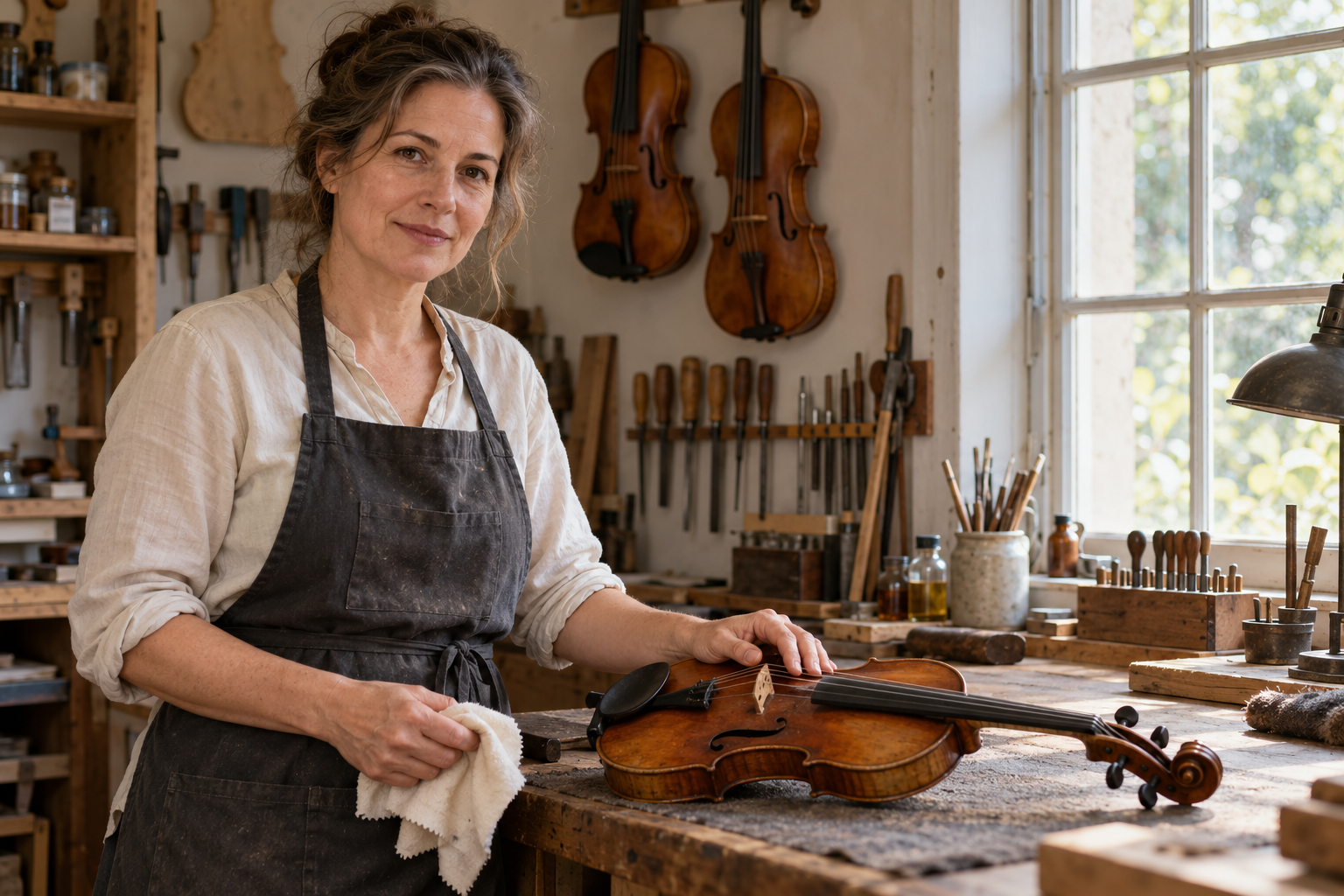
Original Luxe archive image. Window light reaches the face, cloth and violin; the workbench gives the portrait a clear purpose.
Create a landscape 3:2 editorial photograph of a fictional middle-aged woman who repairs musical instruments, standing at a tidy workbench in a modest sunlit workshop. She wears a plain charcoal apron over a cream shirt and rests one relaxed hand on a worn violin; her other hand holds a small polishing cloth, with natural believable fingers. Frame her waist-up on the left third, with two hanging violins and a few organized tools softly visible behind her. Use eye-level perspective, a normal-lens look, soft daylight from a tall window on the right, warm wood colors and subtle skin texture. Her expression is quietly attentive, looking toward the viewer. Keep the eyes and instrument clear while the background remains readable but subordinate. No text, logos, watermark or dramatic beauty retouching.
What this result shows
The right-hand window creates a readable transition across the face and apron. Hands, cloth and violin stay distinct. The wall contains more tools than the brief requested, so lighting alone has not made the background quiet.
One lighting experiment
Keep the person, pose, lens and workshop unchanged. Replace only the soft-daylight instruction with an overcast-window instruction. Compare facial shadow edges and the violin highlights at the same display size.
Keep this quality check
A useful revision should still reveal the eyes, hands and working object. A brighter window is not an improvement if it erases those details.
2. Two light sources: separate the work from the room
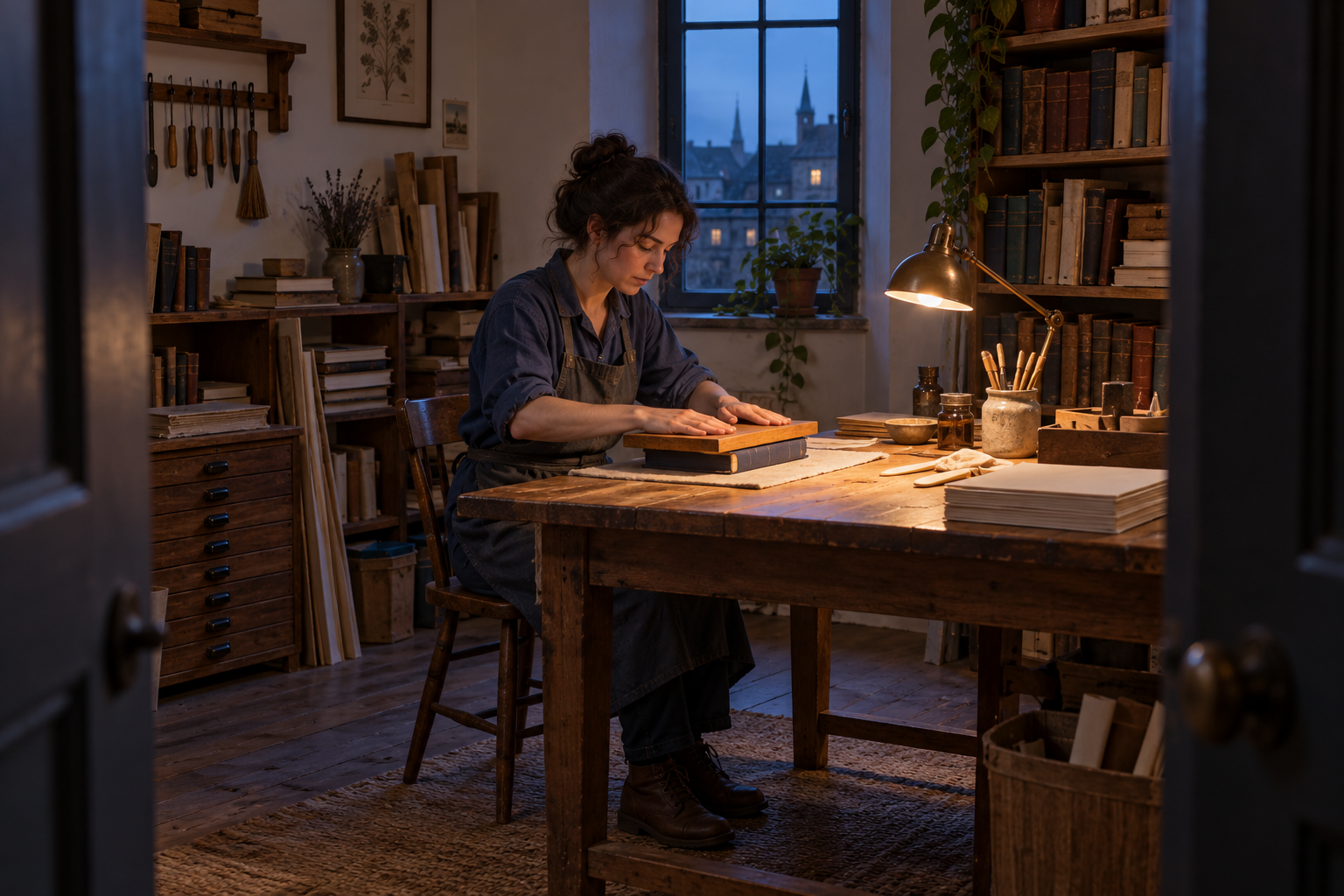
Original Luxe archive image. Warm desk light identifies the task while the blue window places the scene at evening.
Create a landscape 3:2 cinematic editorial photograph of a fictional bookbinder working alone at a wooden table in a small repair studio at blue hour. Use a medium-wide eye-level composition from the open doorway: the complete seated person, table and surrounding shelves fit comfortably in frame. The bookbinder, wearing a simple blue work shirt, presses a closed clothbound book under a wooden finishing board with both hands resting naturally. Place a warm shaded desk lamp beside the work, with cool evening light from a narrow window behind. Let the doorway edges form a subtle dark frame without hiding the subject. Keep paper stacks neat, tools few and the visual story immediately legible: a careful person finishing one book. Natural materials and believable perspective. No readable lettering, logos, watermark, collage or multiple panels.
What this result shows
The lamp lights the finishing board and hands while the window remains cool. The dark doorway helps frame the scene. The table hides part of the seated figure and reaches the edge, despite the wider framing requested.
One lighting experiment
Change only the warm shaded desk lamp to a neutral-white shaded desk lamp. Keep the blue-hour window. Compare whether the hands and book remain the focal point when the warm-cool contrast is reduced.
Keep this quality check
Inspect both hands and the board before judging the atmosphere. A pleasing glow does not fix a cropped subject or unclear action.
3. A small warm glow: give a miniature scene a center
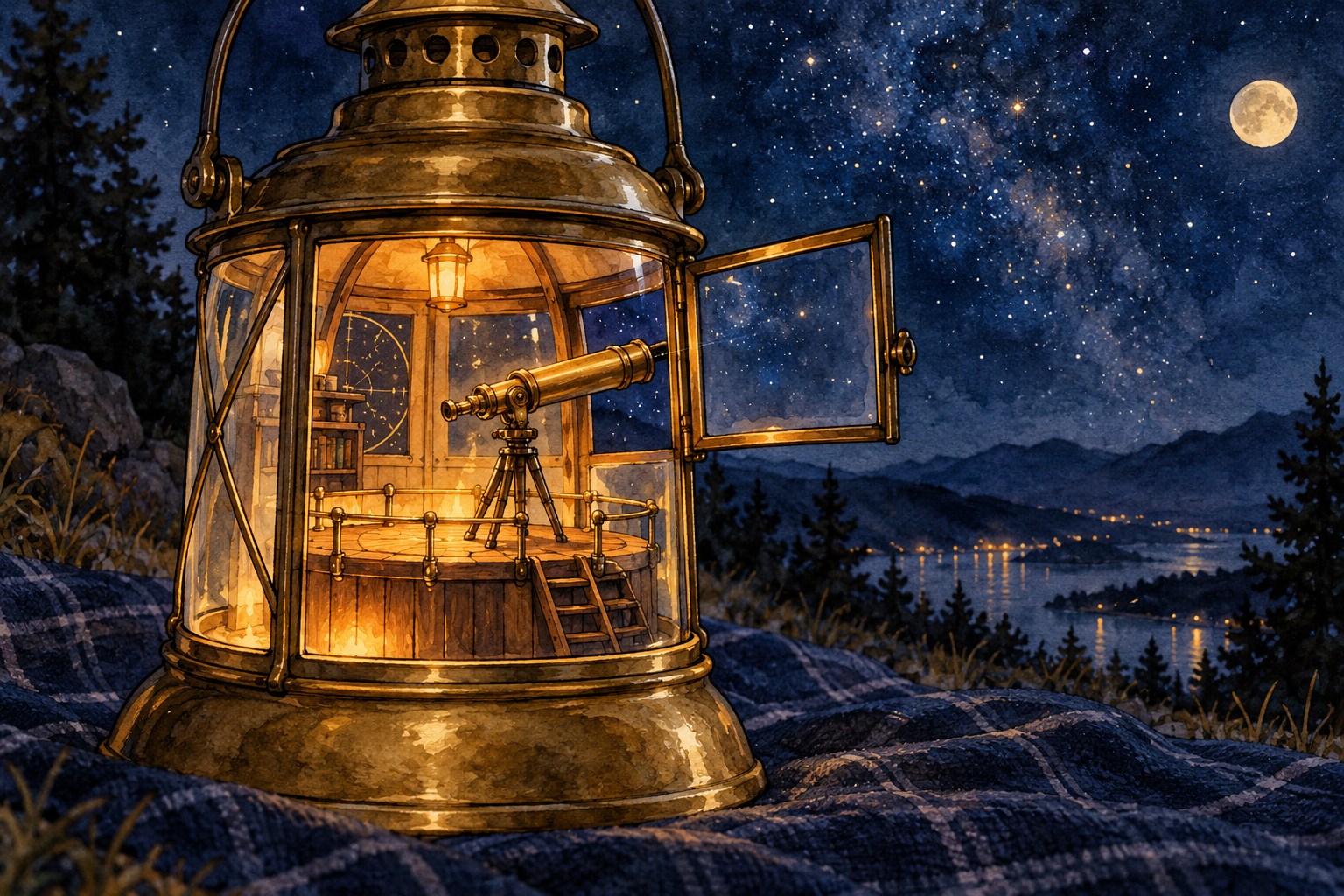
Original Luxe archive image. Amber light gathers around a telescope inside a brass lantern against a deep-blue night.
Create a landscape 3:2 watercolor and ink illustration of a tiny astronomer's observatory inside a large brass camping lantern resting on a dark blue picnic blanket. Inside the clear lantern walls, show one small brass telescope on a tripod, a round raised wooden platform and a short ladder. The telescope points through an open side panel toward a starry sky beyond. Preserve the lantern handle, frame and broad foot so the container is unmistakable. Compose in a close three-quarter view with delicate ink outlines, translucent navy washes and warm amber light from the platform. A single small moon appears in the background sky. Cozy, quiet and carefully constructed rather than mechanically realistic. No people, writing, logos or watermark.
What this result shows
The telescope, platform and short ladder form a readable miniature interior. The result adds a hanging light and star charts. The lantern sits on rocks rather than the requested picnic blanket, and its handle extends beyond the frame.
One lighting experiment
Keep the lantern and night scene intact. Ask for a dimmer amber glow confined to the platform. Compare whether the telescope remains clear while the outside sky gains visual weight.
Keep this quality check
Look for a telescope opening that stays unobstructed, a ladder that reaches its platform, and a recognizable lantern frame. Strong mood can distract from these structural misses.
4. Blue hour: use warm windows to suggest a destination
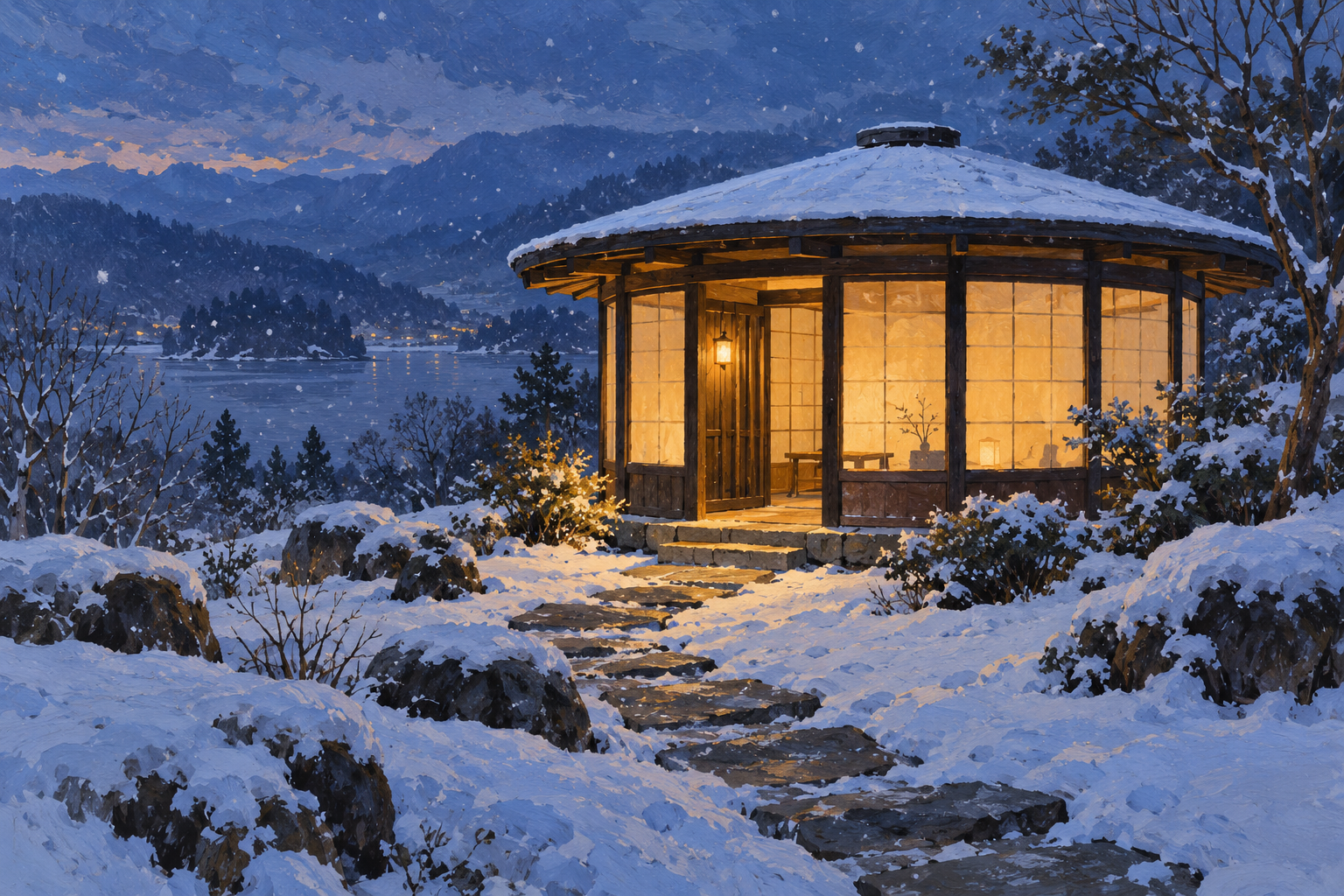
Original Luxe archive image. Warm window panels and a visible path draw attention through a cool snowy landscape.
Create a landscape 3:2 gouache architectural painting of a fictional small circular tea pavilion in a snowy landscape at blue hour. The building has a dark timber frame, broad translucent paper-like window panels and a shallow curved roof capped with a thin layer of snow. Warm golden light glows gently through the windows, contrasting with the cool blue snow and distant indigo hills. Show a clear short stone path leading to a single visible doorway. Use a low eye-level three-quarter view, confident broad brushwork, restrained detail and soft falling snow. Keep the building modest and inviting, with a realistic grounded shadow and no floating elements. No people, lettering, logos or watermark.
What this result shows
The glowing pavilion reads clearly against blue snow, and the path leads toward the doorway. The painting introduces a broad lake and distant lights beyond the simpler hills in the brief. Snow texture is more detailed than a strictly broad-brush study.
One lighting experiment
Keep the building, weather and composition unchanged. Reduce the golden window glow to a faint warm light. Compare the doorway at thumbnail size: is the entrance still easy to find?
Keep this quality check
Treat this as an imaginary architectural painting. Review the route to the door and contact with the ground; the image does not establish buildability.
5. Overcast light: let texture and reflections do the work
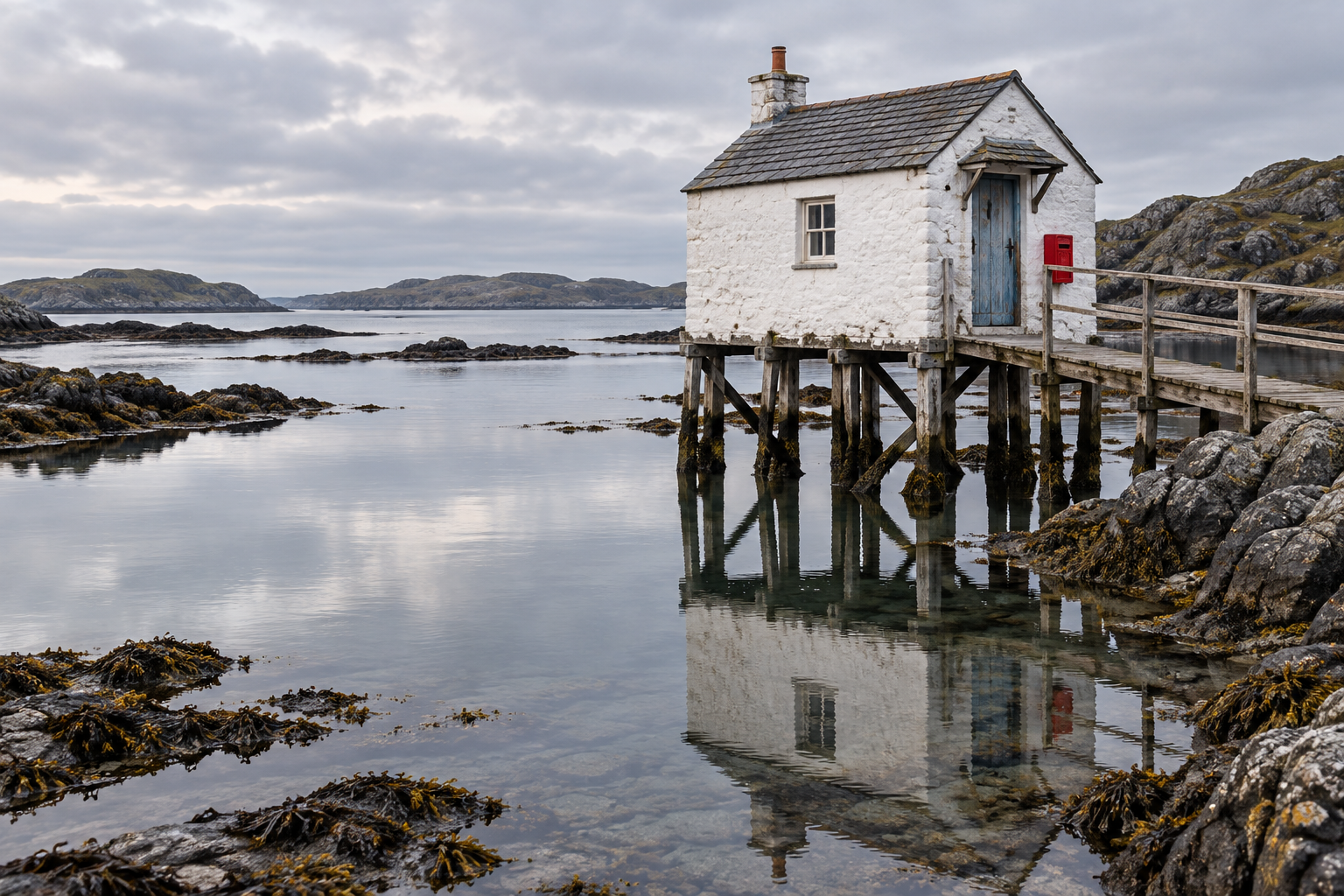
Original Luxe archive image. Soft coastal light makes the white wall, wet timber and reflection readable without a dramatic sunbeam.
Create a landscape 3:2 architectural concept photograph of a fictional tiny post office standing on slender timber stilts above a calm coastal tidal pool. The building is simple, with white limewashed walls, a weathered blue door, one small window and a narrow wooden access bridge from the rocky shore. Include a modest unlettered red post box beside the door. Use a distant three-quarter view at low tide under soft overcast daylight; reflections and exposed dark rocks establish the water level. Restrained slate, chalk and muted blue colors, believable timber connections and a clear path to the entrance. The building should occupy the right half with open reflective water on the left. No people, readable signs, logos or watermark.
What this result shows
The overcast sky leaves detail visible in the wall and supporting timbers. The red post box supplies a small focal accent, and calm water reflects the building. The generated bridge reaches the right frame edge, so the full route from shore is not shown.
One lighting experiment
Change only the soft overcast daylight to low warm side light. Keep the tide level, camera and building fixed. Compare the wall texture, support shadows and clarity of the reflection.
Keep this quality check
Trace each support to the water and inspect the bridge connection. A more dramatic sky is not enough if the revised structure becomes harder to understand.
Your next 15-minute lighting study
- Pick one brief and write down what should attract attention first.
- Generate a baseline with the exact prompt, then save the full text and output.
- Make one lighting change and compare subject visibility, shadow direction and surface detail.
- Record one improvement and one remaining miss. Avoid treating a single pair as proof that one model or method is better.
Source Desk
The five original Luxe Prompting briefs and matching AI-generated images were prepared September 30, 2026 and selected again for this October 3 lighting workshop. They are fictional editorial exercises, not Facebook member submissions or top-performing community posts. Exact generation briefs are preserved. The specific model was not recorded. Lighting revisions above are proposed exercises; their results have not been generated or measured.
A clearer brief. A more useful result.